
Are you looking for the best things to do in Aquileia, Italy?
Smaller and non-touristy cities and towns in Italy have a peculiar charm of their own.
Aquileia is such a place. It is easy to fall in love with and definitely worth looking into as it offers so many fun things to do and must-see attractions.
Aquileia may be off Italy’s main tourist routes, but it was once a significant Roman city. The second most important city in the Roman Empire, as a matter of fact, next to Rome.
Established in 181 BC by the Romans, Aquileia became one of the main military, trading, and economic centers of antiquity. Today it is an important archaeological site that testifies to the grandeur of Ancient Rome.
In 1998, Aquileia was added to Italy’s numerous UNESCO World Heritage Sites.
Austria ruled Aquileia for 500 years and it was only in 1915 that it became part of Italy. It’s near the Austrian and Slovenian borders, so apart from Italian you will also see signs in German and Slovenian.
Dubbed “the second Rome” for its immense archaeological site and the kiloyear-old Patriarchal Basilica with its stupendous mosaics that date to the 4th century, Aquileia is a beautiful town in the province of Udine in the Friuli-Venezia Giulia region. It boasts an artistic and historical treasure trove, one of the absolute must-see places in the region.
You can visit Aquileia as a day trip from Venice and Trieste. It’s a few miles from the Adriatic coast, so if you want to spend time on the beach there is a seaside resort you can check out, which used to be Aquileia’s seaport.
14 Best Things To Do in Aquileia, Italy
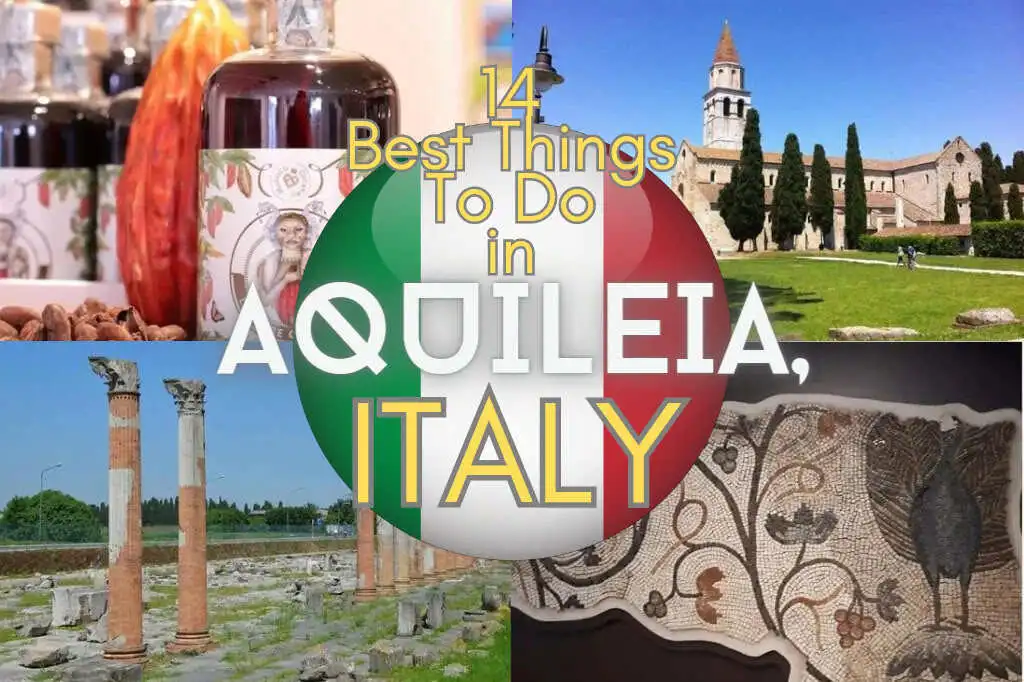
Whether you’re heading off to this quiet northern Italian city for a weekend or you’re planning on a longer vacation, here are the 14 best things to do in Aquileia, Italy.
1. Visit the Patriarchal Basilica of Aquileia
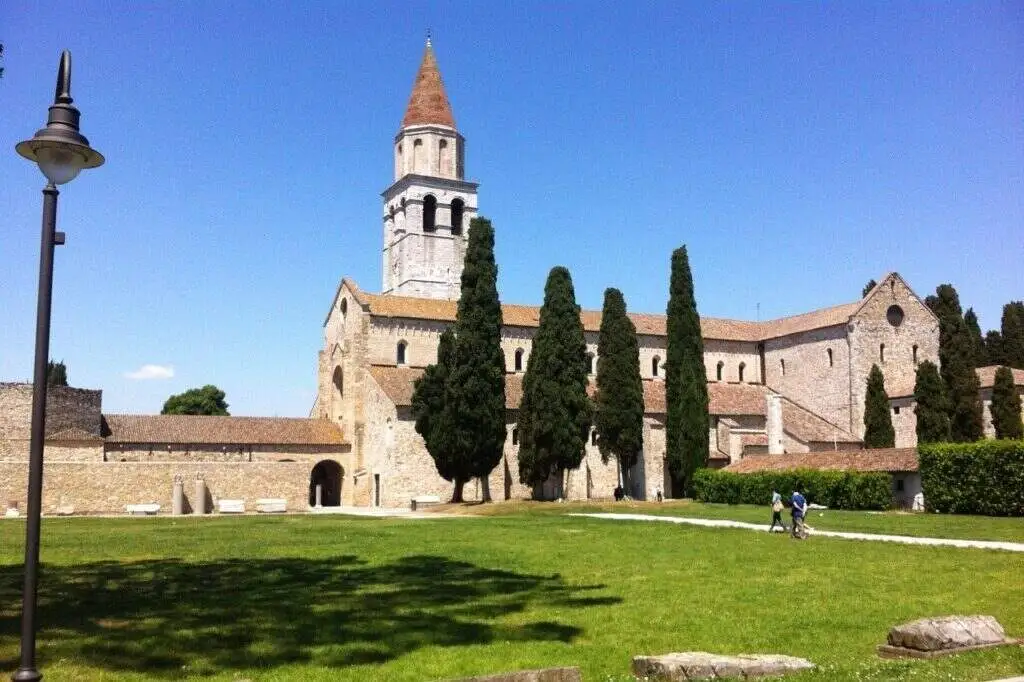
This house of worship with 4th-century mosaic will inspire a sense of reverence in you no matter your religious affiliation.
The Patriarchal Basilica of Aquileia, also known as the Basilica di Santa Maria Assunta (Basilica of the Assumption of Mary), which has been restructured and extended in the ages past, rises on a 4th-century building. Its current structure — to a great extent — is the one that was built in the 11th century.
The main feature of the Basilica of Aquileia is the 4th-century mosaic floor, which is the largest in the whole western Christian world. It is brimming with Christian symbolisms, representing the victory of life over death. This work of art is amazing; you will only see a few like this in your lifetime.
Everything about this church will make you reflect upon the thousands of hours it must have taken to construct it, especially the mosaics on the floor. A definite must-see attractions in Aquileia.
2. Check out the crypts at the Basilica
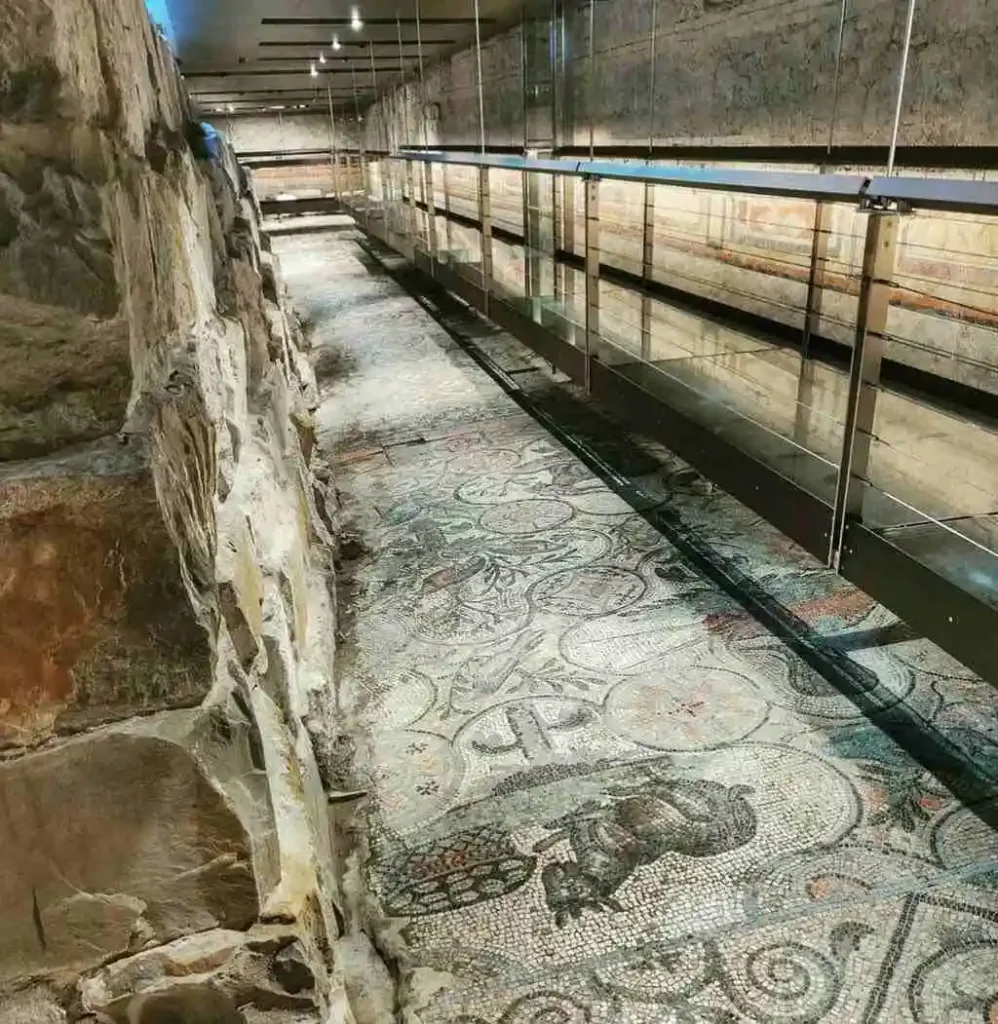
The Patriarchal Basilica of Aquileia has an amazing mosaic floor and two crypts — the Cripta degli Affreschi (Fresco Crypt) and the Cripta degli Scavi (Crypt of the Excavations).
The Crypt of Excavations has geometric mosaics, terracotta flooring from the earlier stage of the basilica complex, and more 4th-century mosaic. The Fresco Crypt is the one close to the altar, containing some faded but still beautiful 12th-century frescoes.
3. Stop by the Church of the Pagans
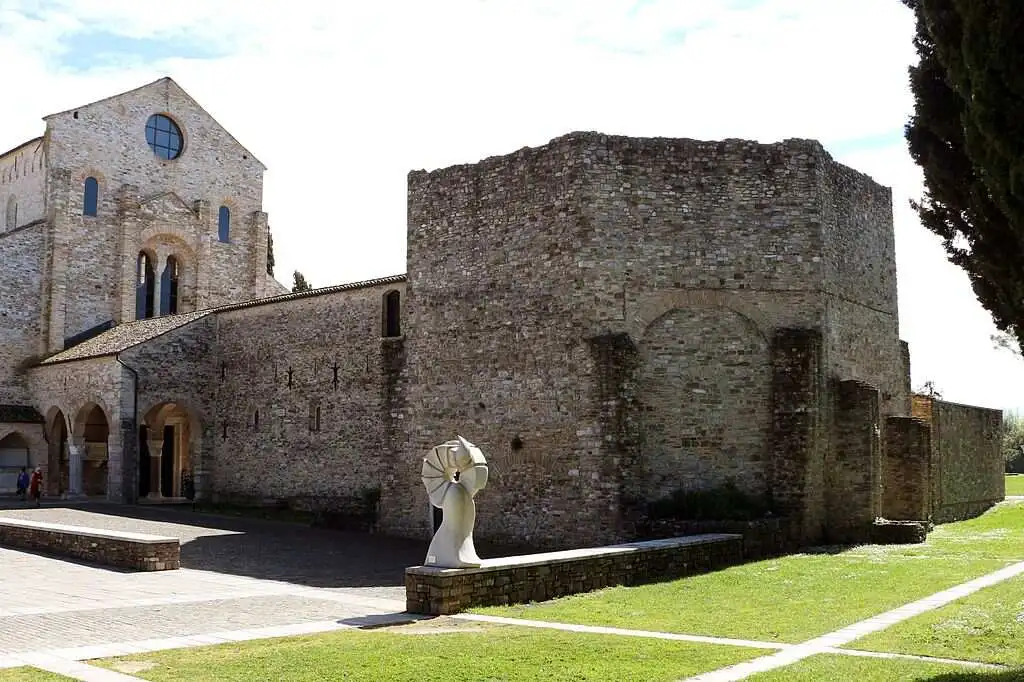
Photo by Sailko via Wikimedia Commons
Chiesa dei Pagani or Church of the Pagans is the small ancient building that connects the Basilica to the beautiful Baptistery.
The church was built for those who were not yet baptized, therefore, still technically “pagans.”
You can access the Chiesa dei Pagani to see more frescoes and mosaics before going to the Baptistery.
4. See more mosaics in the Basilica di Aquileia’s Baptistery
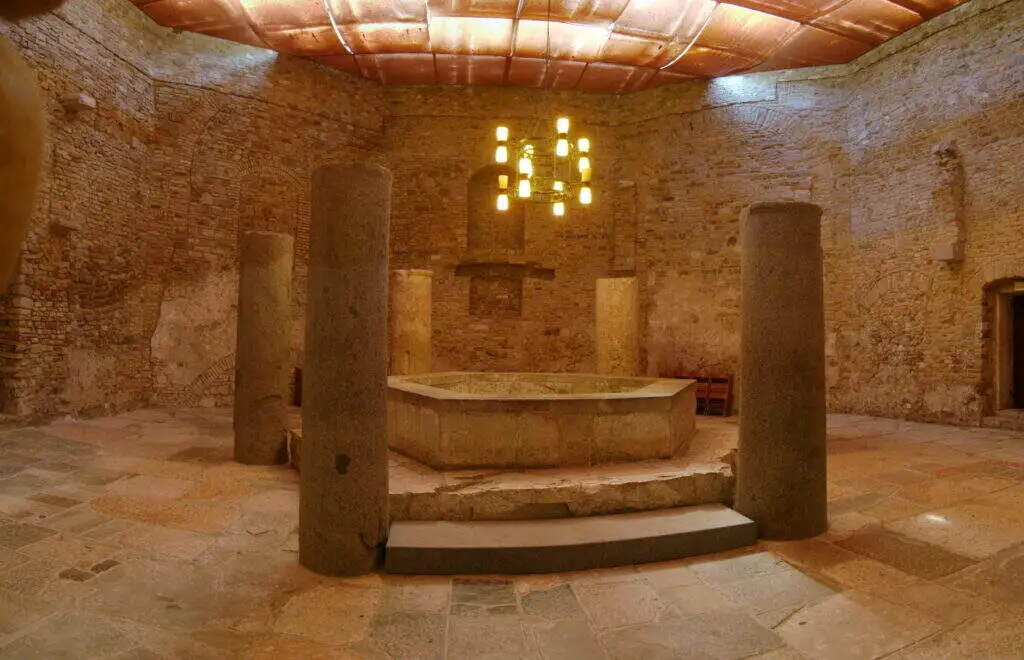
Photo by Il Faentino via Wikimedia Commons
In case you haven’t had enough, there are more mosaics in the Baptistery.
The beautiful baptismal font was where “pagans” received the Sacrament to become Christians/Catholics.
5. Explore the Südhalle at the Basilica di Aquileia
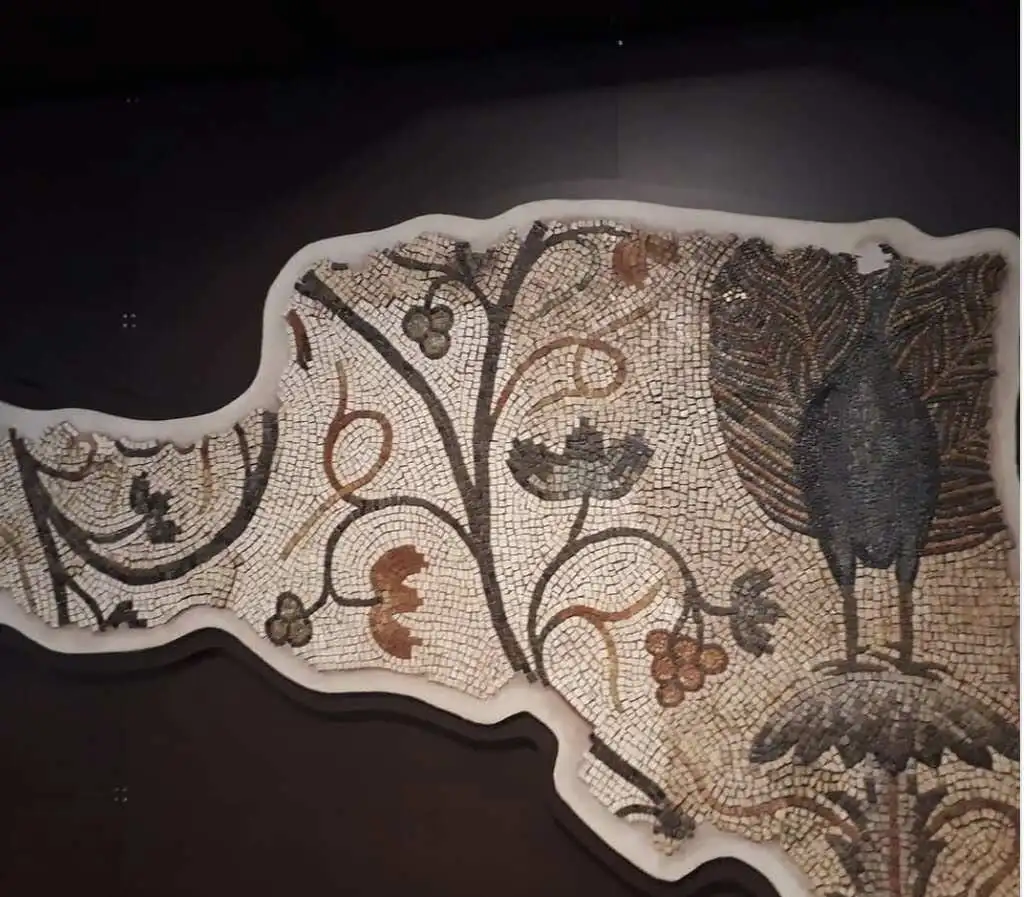
Just when you think you’ve had enough, you will realize there are more to see in the Südhalle.
Translated from German as “southern hall,” Südhalle was discovered by German archaeologists. The Südhalle mosaics date back to sometime between the late 4th and the early 5th centuries. There is a north hall, actually, called Nordhalle, but the mosaic here is incomplete.
The Südhalle is a modern structure that houses mosaics and sarcophagi which are best admired after dark and from the large glass windows that cover most of the length of the mosaics. The rest is occupied by a platform used to access from the baptistery.
On the wall farther from the glass window you will see a beautiful mosaic fragment of a peacock with its tail fanned. As a symbol of eternal life, the peacock in the mosaic is an allegory of the resurrection. The tesserae in one tail eye of the bird were coated with thin gold foil which add further value to this piece of art.
6. Climb the Aquileia Bell Tower
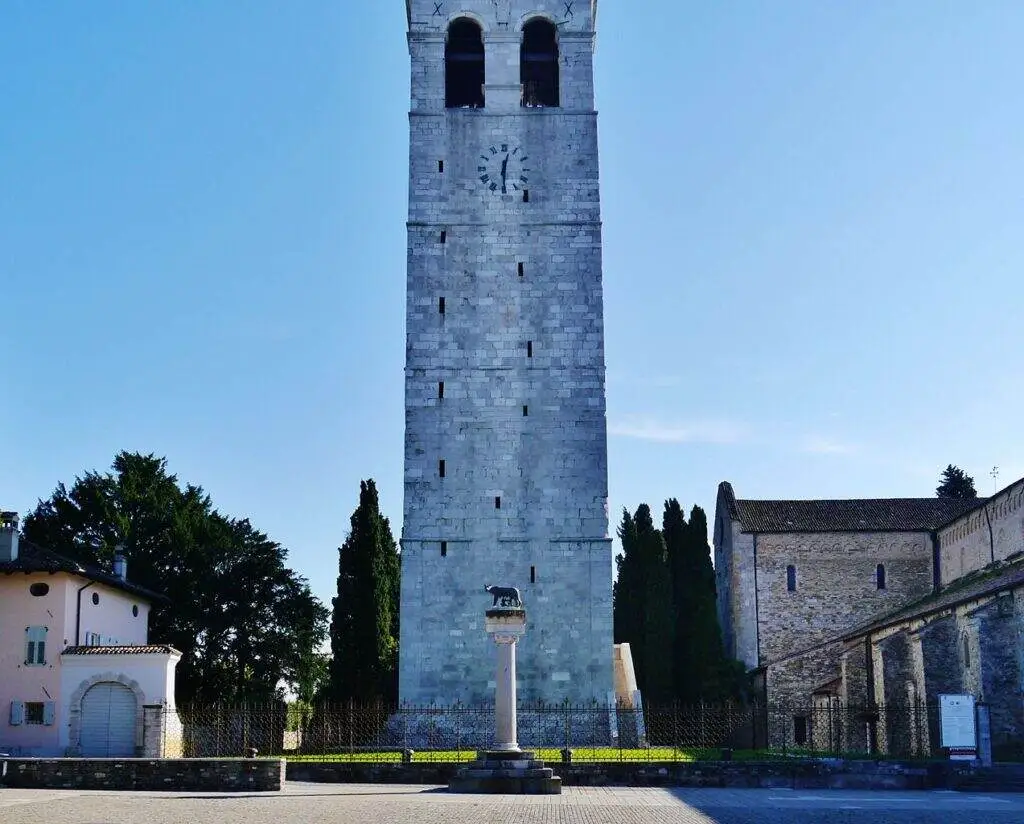
The Italians have always been such fabulous builders. Il campanile di Aquileia or the Aquileia Bell Tower is just one of hundreds, maybe thousands, that serve as proof of this.
Built in 1402, it was originally a simple tower with a bell-chamber and a low hipped roof. The 73-m high campanile di Aquileia has undergone improvements and it still stands atop a thousand-year-old structure.
It’s a pleasure to see Roman history from the outside, but climbing the stairs — even for those who do not fancy climbing — is a different experience. Looking down at the entrance you can see the original mosaic floor through which the foundations were built. It’s a safe climb up with good steps leading to the top. Here you can get decent views of the Friulian plain.
However, please note that the imposing bell tower is working and the ringing is a bit loud when you are next to the bells, so make sure to time your visit so you are not at the top when they ring.
7. Discover the Aquileia Roman Ruins
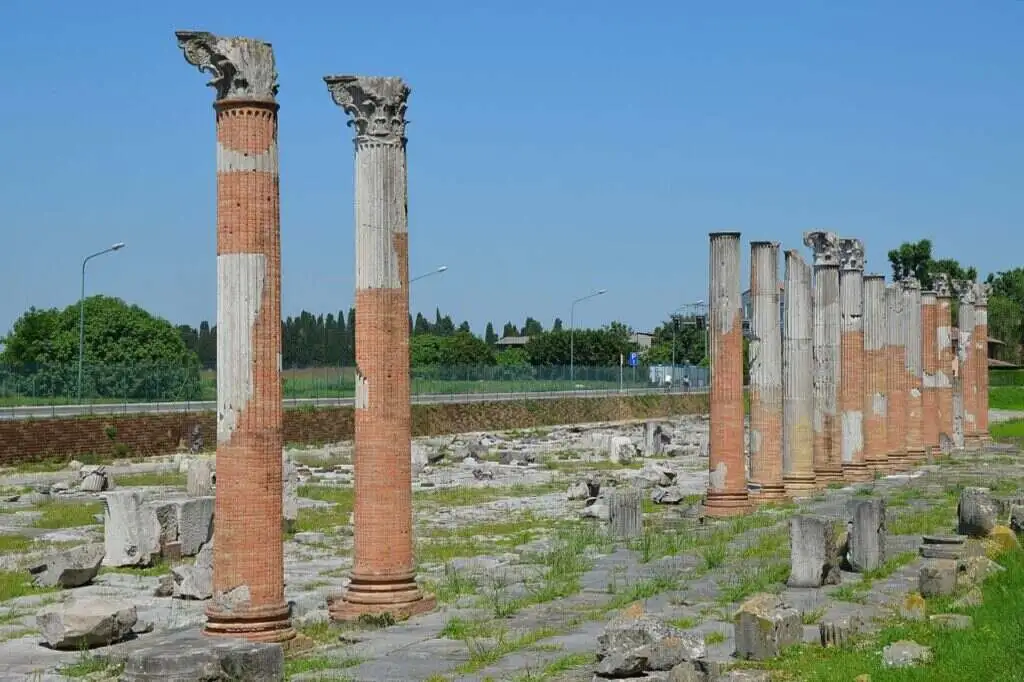
A visit to Aquileia is not complete without exploring the most beautiful corners of this former royal seat of the Roman emperors, now a UNESCO World Heritage Site.
This is your chance to discover the customs, culture, and habits of the ancient Romans without having to go to the crowded Italian capital.
Aquileia Roman Ruins is an immense archaeological site, one of the best-preserved testimonies to the grandeur of Ancient Rome.
Here you can see the Roman forum, residential buildings, and necropolis, as well as the river harbor, complete with warehouses and piers. Also visible in part today are the circus or racing arena and the amphitheatre.
The site of the Roman ruins is one of the best places to visit in Aquileia, so it’s a must-experience for those who want to delve deeper into Roman history.
8. Explore the National Archaeological Museum of Aquileia
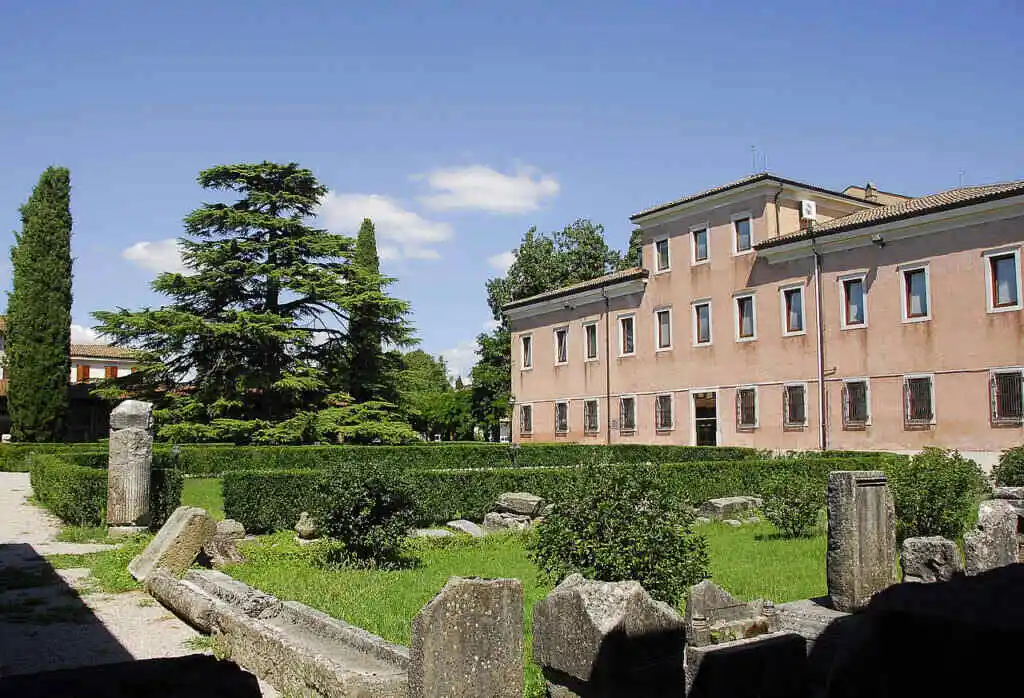
If you’re a history buff, there is quite a lot to see in Aquileia.
Museo Archeologico Nazionale or National Archaeological Museum of Aquileia is one of its two museums. Situated at the Cassis Faraone Villa, it is one of Italy’s largest museums on Roman civilization. The museum houses collections of ancient Roman statues, jewelry, and coins, as well as household and other ornamental furnishings.
Exploring this splendid Roman museum will enable you to feel and see some of Aquileia’s former splendor. You will be transported to the Roman era as you check out the rooms filled with statues, stone monuments, and other artifacts a from those long forgotten times.
A visit to the garden around the museum is also warranted. Here you will see numerous Roman urns, columns, and tombstones of every kind, a lot of them completely preserved and the Latin inscriptions still visible.
The National Archaeological Museum of Aquileia is a gem in this part of Italy — truly a second Rome away from Rome. An absolute must in Aquileia.
9. See the Chiesa di Sant’Antonio Abate
Just past the museum on a side street lies the nice little 18th-century church called Chiesa di Sant’Antonio Abate or the Church of Sant’Antonio Abate. It was one of the six churches that served as a crown to Grado’s Basilica of Sant’Eufemia.
This small hut-shaped church is one of the many gems you can find in Aquileia. It is situated a just few meters from the entrance to the National Archaeological Museum, on the way to the Roman burial ground.
Chiesa di Sant’Antonio Abate is dedicated to the patron saint of the town. It was built in the 1700s on the top of a dune, one of the few remaining and characterizing the coast.
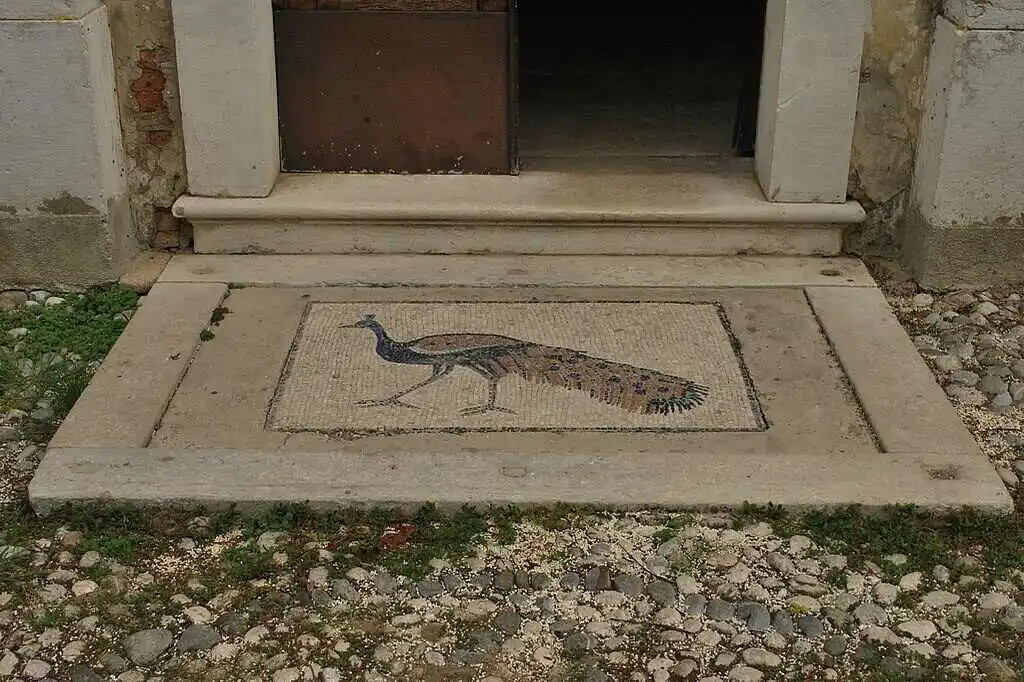
Near the entrance door in the churchyard, visitors will see another mosaic of a peacock, which was an important symbol for early Christians, as it represents resurrection and immortality.
Chiesa is located in a hamlet of Aquileia called Belvedere. Definitely worth seeing.
10. Go to the Sepolcreto
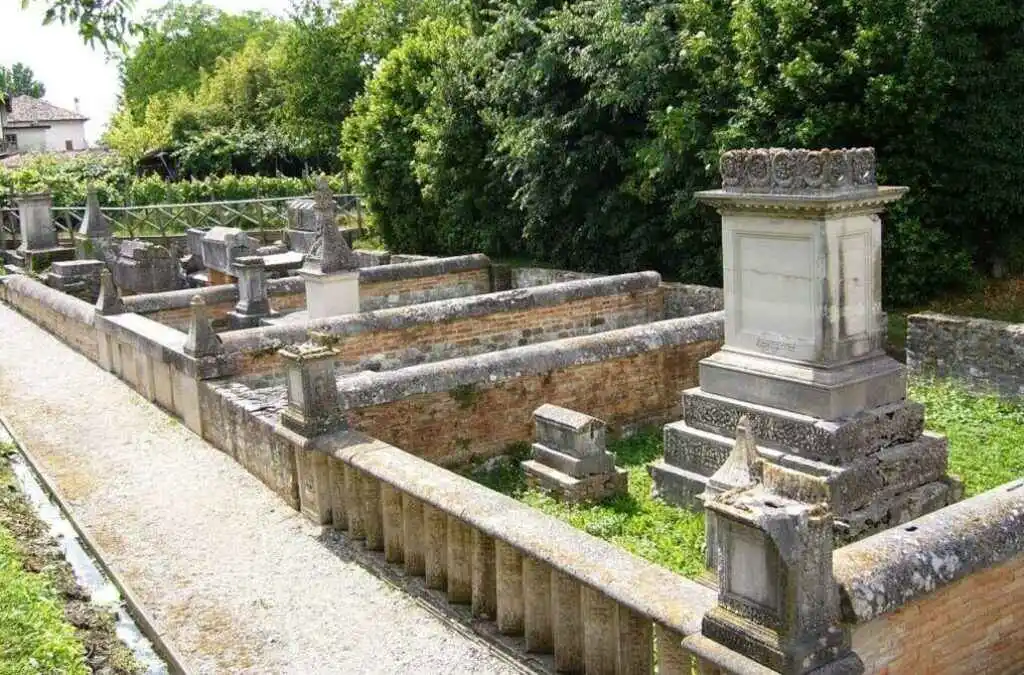
Further down the street, past some pleasant country-town style buildings, a riverside piazza, and some local shops for refreshments, you will be directed by signposts right to the Sepolcreto.
Sepolcreto is a reconstructed stretch of five burial plots, alongside a secondary road leading outside the city. It is situated behind local backyards with beautiful gardens, giving the place a rather eerie suburban feel.
Il Sepolcreto is the only portion of a necropolis you can see in Aquileia. The five tombs, belonging to five families in Aquileia, are all equal in width but different in length. They, along with extant monuments, were excavated in 1940 and 1941.
Archaeologists have recently uncovered new cremation and inhumation graves that had been previously overlooked.
Walking back towards the main road, over some incomplete excavations, provides nice views of the mountains. A field bordered by piles of large stones, many of them used in construction, will remind you that it was once a city.
11. Visit the Museum of Early Christianity
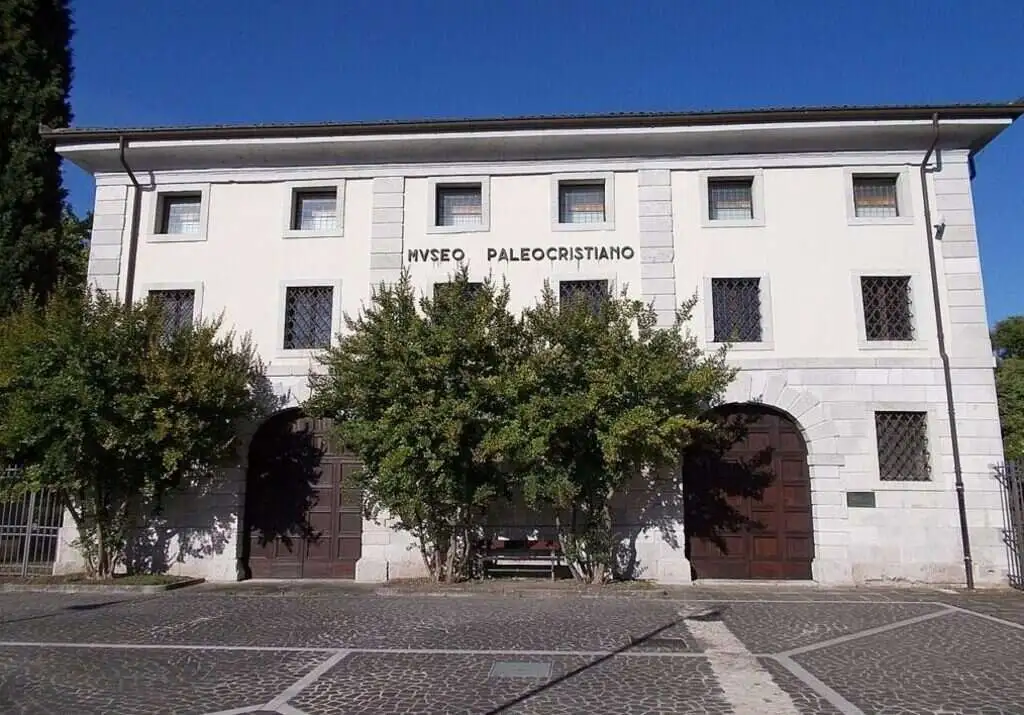
Aquileia, a thriving city toward the end of the period of the Roman Republic and the beginning of its Empire, was around when the spread of Christianity throughout the Mediterranean began.
You can learn more about this time in history at the Museo Paleocristiano or Museum of Early Christianity, a small but quite well-furnished museum — again with mosaics that add to the beauty of the place.
ALSO READ:
11 Best Free Museums in Italy
Located in a hamlet called Monastero in the north of Aquileia, the Museo Paleocristiano stands over the remains of an old basilica. Small but big in historical context, this museum is easily reached from Aquileia’s main square, the Piazza Capitolo. Visitors can walk along the delightful tree-lined archaeological route to reach Monastero.
The location of the museum was the early Christian basilica of Fondo Tullio, then a Benedictine monastery and an agricultural environment, and before it finally became the Museo Paleocristiano in 1961. It is a museum slash archaeological site, with the current edifice being only the last of a long process of reconstructions made on the site in over 15 centuries.
12. Discover the famous Aquileia Wine Road

Aquileia has an array of wines noted throughout the world for their eminence and distinction, owed to the close proximity to the Adriatic Sea and the exquisite quality of the soil.
The famous Aquileia Wine Road starts from Aquileia and crosses 13 towns in the plains, among them the stunning Cervignano del Friuli, Strassoldo, and Palmanova, before it reaches the last town, Clauliano. As the area has been used in viticulture since the Roman times, the wine road features centuries-old vineyards. The ancient viticulture tradition is still practiced here today.
The wines that come from these towns are endowed with unique flavors and aromas, the most popular of which are Malvasia Istriana, Traminer, Friulano, Merlot, Refosco, Riesling, and Cabernet Franc. Various other reds and whites are also produced in the area.
You can taste and enjoy many delicious wines in wineries along this famous road.
13. Enjoy Aquileia’s cuisine
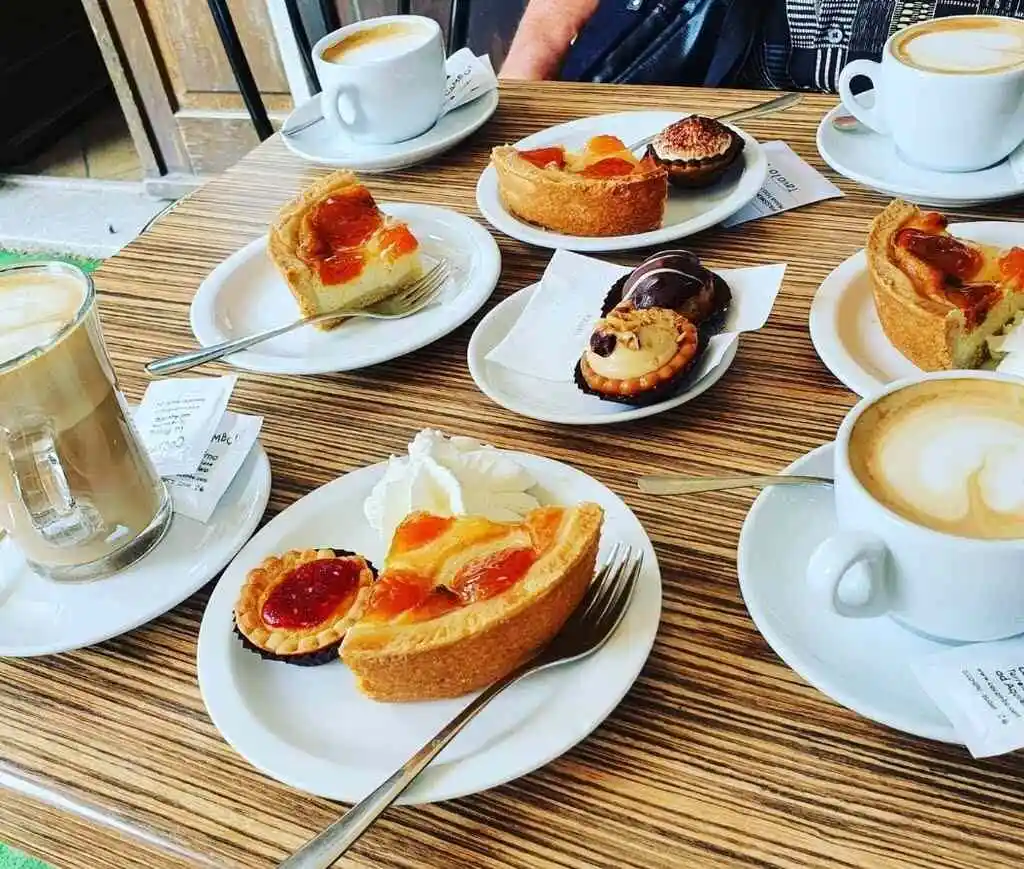
Fried foods with polenta are popular in Aquileia, so are fresh fish and seafood like grilled cuttlefish and squid. These are usually accompanied by a glass of white Malvasia. There are also other regional specialties made with duck and goose, as well as Montasio cheese and omelets.
White and green asparagus are grown in the area, so you cab expect to eat a lot of them if you visit in the springtime.
For pastries, go visit the Pasticceria Mosaico Aquileia found at the Piazalla Capitolo. Their gelato and mascarpone cake are to die for!
Every food you will partake in when dining in Aquileia is locally sourced and absolutely delectable, so expect to be delighted.
14. Have fun at the Cocambo artisan chocolate and coffee factory
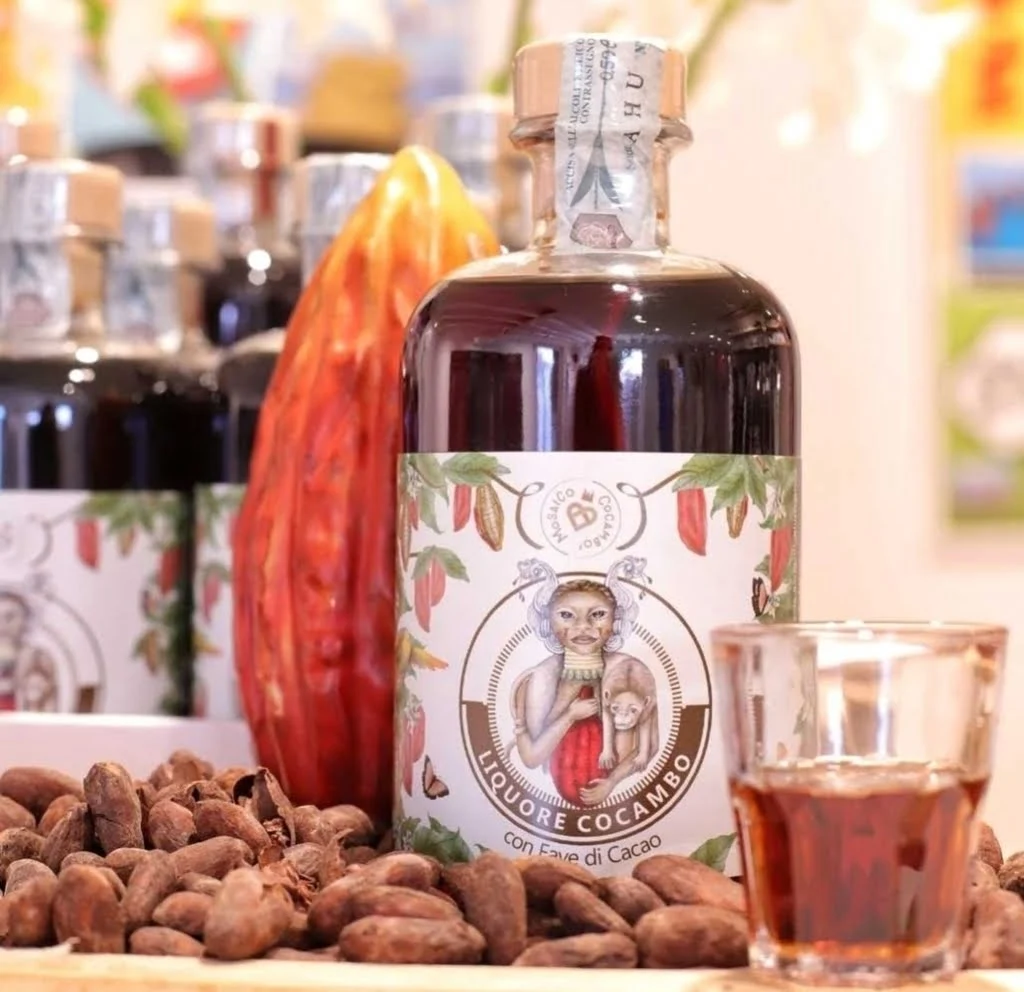
Cocambo is an important chocolate factory, being the first and only in the region and one of five in the country, making it one of the best places to visit in Aquileia.
Cocambo offers guided tours, chocolate and coffee tastings, cooking shows, and even private parties. These are among the best activities in Aquileia that you shouldn’t miss.
Adults and children alike will have a unique experience in the chocolate laboratory. Here you will learn about cocoa and coffee beans, the processing and tasting techniques where you’ll have the ability to evaluate true chocolate and coffee excellence.