
Curious to discover famous Italian architects and their masterpieces? We’ve prepared a list for you. Read on.
Italy boasts an impressive architectural heritage that tells a story spanning from ancient times right up to the present day. It’s a journey through history in every building and structure.
Il Bel Paese has produced a rich legacy of architects who have made a profound impact on Western civilization’s history, shaping not only the country’s landscape and culture but also leaving a lasting imprint far beyond its borders.
Below, you’ll discover some of the most famous Italian architects and their masterpieces.
10 Most Famous Italian Architects and Their Masterpieces
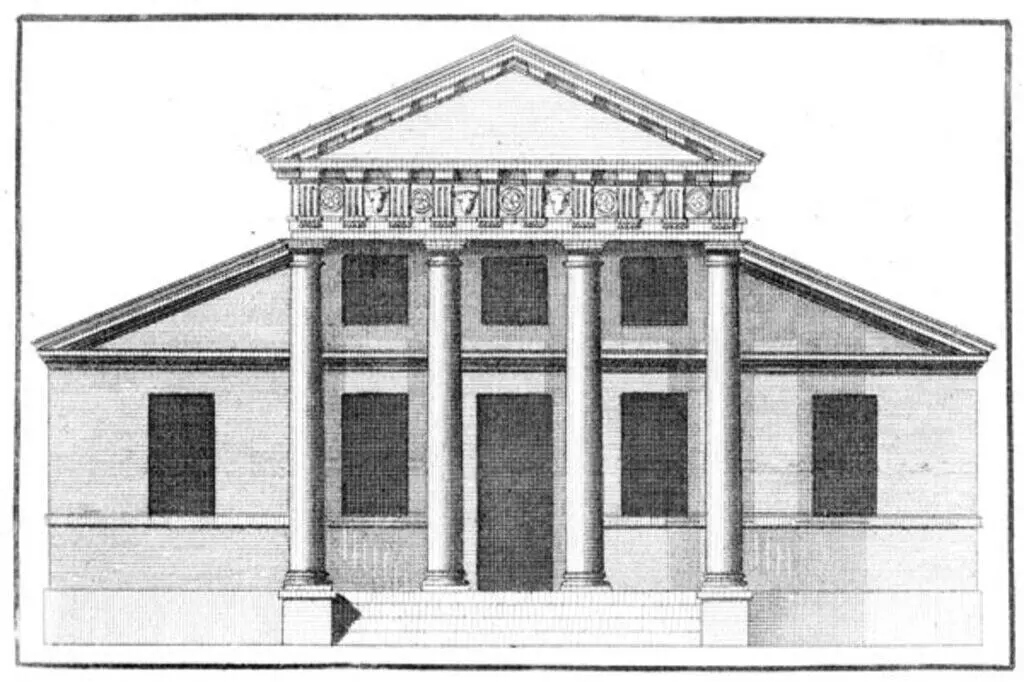
Let us explore 10 of the most famous Italian architects and their notable architectural achievements, which showcase their creativity, skill, and vision.
1. Filippo Brunelleschi


Filippo Brunelleschi, often hailed as the pioneer of Renaissance architecture, emerges as an architectural luminary whose innovations have left an indelible mark on the field. His legacy is a testament to his profound influence and unwavering creativity.
Brunelleschi’s crowning achievement, the design and construction of the Florence Cathedral’s dome, held the distinction of being the world’s largest dome during its time.
Beyond the dome, Brunelleschi graced Florence with his architectural genius through projects like the Ospedale degli Innocenti (Hospital of the Innocents), the Basilica of San Lorenzo, and the Pazzi Chapel.

In addition to his architectural achievements, Brunelleschi played a pivotal role in the art world by pioneering the application of linear perspective in painting. This groundbreaking approach forever altered the course of artistic expression.
2. Michelangelo Buonarroti

Michelangelo Buonarroti is an iconic figure in the annals of art history, celebrated for his exceptional talents in painting, sculpture, poetry, and architecture. He is recognized as one of the foremost masters of the High Renaissance, a true genius of artistic expression.
As an architect, Michelangelo left a significant mark on the city of Rome, contributing to some of its most iconic structures. Notable among his architectural masterpieces are St. Peter’s Basilica; the Sistine Chapel, where he adorned the ceiling with his masterful artwork, including the Last Judgment; and the Laurentian Library.
Michelangelo’s architectural talents weren’t confined to those famous landmarks. He channeled his visionary design skills into crafting tombs, palaces, fortifications, and urban projects.
3. Gian Lorenzo Bernini

Gian Lorenzo Bernini is one of the greatest sculptors and architects of the Baroque era, who transformed Rome into a city of flair and splendor. He is famous for his sculptures that vividly portray motion, emotion, and a lifelike quality.
Bernini also designed and built many architectural works that enhance the urban fabric and character of Rome, including St. Peter’s Square, Sant’Andrea al Quirinale, and the Fontana dei Quattro Fiumi (Fountain of the Four Rivers) – one of Rome’s most beautiful fountains, located in the famous Piazza Navona.
4. Andrea Palladio

Andrea Palladio’s style and principles have inspired generations of architects around the world. He is known as the founder of Palladianism, a classical style of architecture based on symmetry, proportion, harmony, and elegance.
Palladio’s architectural legacy is prominent in his native Veneto region, where he crafted a myriad of villas, churches, palaces, and public structures. Among his notable creations are Villa La Rotonda, Basilica Palladiana, Palazzo Chiericati, and Teatro Olimpico.
Andrea Palladio also penned a treatise on architecture called The Four Books of Architecture, which became a cornerstone reference for architectural theory and practice.
5. Francesco Borromini

Francesco Borromini is one of the most innovative architects of the Baroque era, boldly challenging the established norms of classical architecture.
His work is characterized by its intricate and unconventional forms, marked by the skillful use of curves, angles, light, and space to craft dynamic and dramatic architectural experiences.
Throughout his career, Borromini left a lasting mark on Rome, designing and constructing numerous churches and palaces that exemplify his creative brilliance.
Notable among Borromini’s creations are the San Carlino Church, the Church of Sant’Ivo alla Sapienza, and Palazzo Spada – all of which can be admired in Rome.
6. Pier Luigi Nervi

Pier Luigi Nervi is a monumental figure in 20th-century engineering and architecture. His pioneering use of reinforced concrete led to the creation of innovative and gracefully designed structures.
Nervi’s brilliance lay in his profound understanding of structural design and analysis, enabling him to craft organic and expressive forms using concrete. His portfolio is a testament to his skill and creativity, featuring stadiums, halls, churches, and towers in both Italy and abroad.
Pier Luigi Nervi’s architectural masterpieces include the Flaminio Stadium in Rome, the Palazzetto dello Sport (also in Rome), and the Cathedral of Saint Mary of the Assumption in San Francisco, California, USA.
7. Renzo Piano


Renzo Piano is one of the most famous and prolific Italian architects of the contemporary era, who has designed and built many iconic and diverse buildings around the world. He is known for his use of light, materials, technology, and context to create humanistic and sustainable architecture.
Renzo Piano has worked with architects and engineers in creating innovative and elegant solutions for a wide array of challenges and purposes.
He has worked on an impressive range of projects, including museums, cultural centers, airports, bridges, and skyscrapers. Some of his notable creations include the Centre Pompidou in Paris, The Shard in London, and the Jean-Marie Tjibaou Cultural Centre in New Caledonia.
8. Giuseppe Terragni

Giuseppe Terragni is one of the most influential architects of Italian rationalism, a modernist movement with a mission to craft buildings that are not only functional but also deeply logical in their design, embracing geometric shapes and structural transparency.
His architectural language was characterized by a clever blend of concrete, steel, glass, and the strategic use of color, resulting in creations that are not only utilitarian but also visually striking and tasteful.
Giuseppe Terragni left a lasting impact by designing and constructing numerous public and private buildings in Como and Milan. His work embodied his belief that architecture could serve as a means of expressing social and cultural values.
One of his masterpieces is the Casa del Fascio in Como. Another notable achievement is the Casa Rustici in Milan. Terragni also lent his sculptural talent to the Monumento ai Caduti, also in Como.
9. Aldo Rossi

Aldo Rossi is one of the most renowned and, at times, provocative architects of the postmodern era. He daringly challenged the established norms of modernism with a critical and historically influenced approach to architecture.
Aldo Rossi’s distinctive architectural style involved using typology, geometry, color, and symbolism to create buildings that were both poetic and grand in scale.
Some of his noteworthy works include the Teatro del Mondo in Venice, the San Cataldo Cemetery in Modena, and the Bonnefanten Museum in Maastricht, Netherlands.
Beyond his architectural creations, Rossi’s influence also extended into literature. He authored several books and essays on architectural theory and history, with The Architecture of the City becoming a seminal work that significantly impacted urban design.
10. Massimiliano Fuksas


Massimiliano Fuksas, one of the most Italian architect of modern times, is known for his groundbreaking and cutting-edge designs. Over the course of many years in the field, he has made a lasting impact on modern architecture.
Fuksas’ distinctive style blends creativity, experimentation, and functionality. His notable projects include the FieraMilano Complex in Milan, the Armani Ginza Tower in Tokyo; the Zénith Music Hall in Strasbourg; the Peres Peace House in Jaffa, Israel; and the Rome Convention Center, known as “La Nuvola” (“The Cloud”), in the Italian capital.
His designs often feature innovative materials, striking forms, and a focus on transparency and natural light.