
Looking for a break from the usual tourist attractions? Explore the most famous trees in Italy for a unique and refreshing experience!
Italy is famous for its artistic and cultural treasures, but it also boasts a variety of extraordinary trees that serve as living reminders of history’s passing. These amazing wonders have not only witnessed centuries worth of change but are also essential components in creating Italy’s picturesque surroundings.
Nature has created a stunning blend of unique and captivating trees on the enchanting Italian landscape – from the peculiar double tree and the towering cypresses that line Tuscan avenues to the ancient olive and fig trees that have witnessed generations passing by. Their fascinating stories make them such an important part of Italy’s natural heritage.
Local communities embrace these trees as landmarks, gathering spots, and sources of inspiration for art, literature, and culture.
Come and join us on a mesmerizing journey as we revel in the awe-inspiring splendor of Italy’s famous unique trees that have entranced locals and tourists alike!
- MUST-READ: 13 Most Important Italian Tree Species
10 Famous Trees in Italy
Let’s check out some of the most famous trees in Italy, each with its own captivating tale to tell.
1. The Double Tree of Casorzo

The Bialbero di Casorzo (“Double Tree of Casorzo”) can be found in the Northern Italian region of Piedmont. This unique tree consists of a mulberry tree with a cherry tree growing on top of it. The cherry tree gracefully rises above the mulberry tree, creating a stunning sight and sparking curiosity and wonder.
This peculiar tree has mysterious origins and legends. One tale suggests it was two cherry trees that merged at the base. Another legend tells of intertwined spirits of star-crossed lovers buried there. Despite debate over its scientific explanation, it is a prized natural monument for both locals and tourists.
The Bialbero di Casorzo is a remarkable natural phenomenon that is a must-see for nature enthusiasts. Nestled between Grana and Casorzo, this unique attraction is truly one of the most peculiar sights you will ever encounter.
2. The Olive Tree of Peace
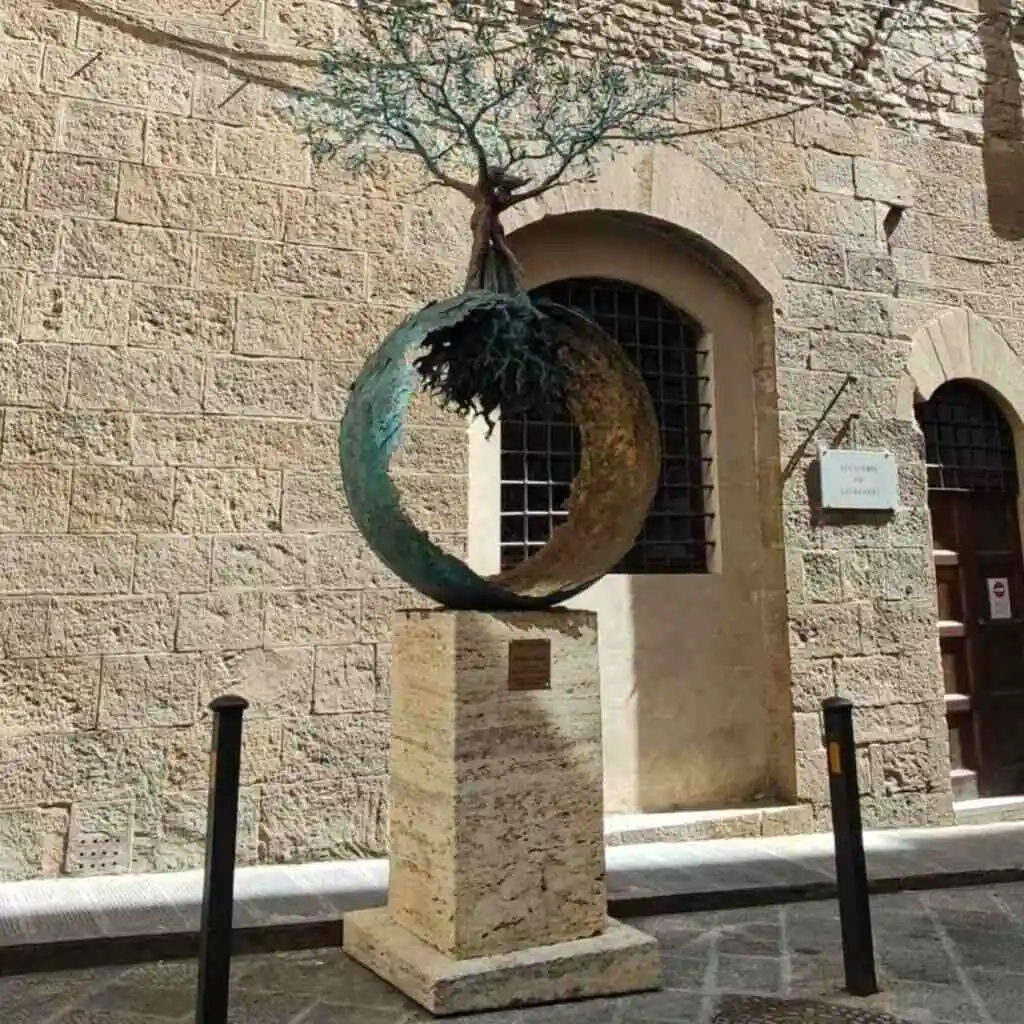
In memory of the tragic 1993 bomb attack carried out by the Sicilian Mafia in Via dei Georgofili in Florence, the Olive Tree of Peace was planted as a living tribute to the victims. Since 2004, a spot at the junction of Via dei Georgofili and Via Lambertesca has been home an olive tree that symbolizes peace and resilience.
The Olive Tree of Peace, estimated to be between 250 and 300 years old, proudly displays a plaque in Italian, bearing a profound message: “This olive, this generous mythological symbol of holiness and great values, has the emblematic capacity to regenerate its productivity, although it suffers events due to nature or man.”
3. The Hundred-Horse Chestnut
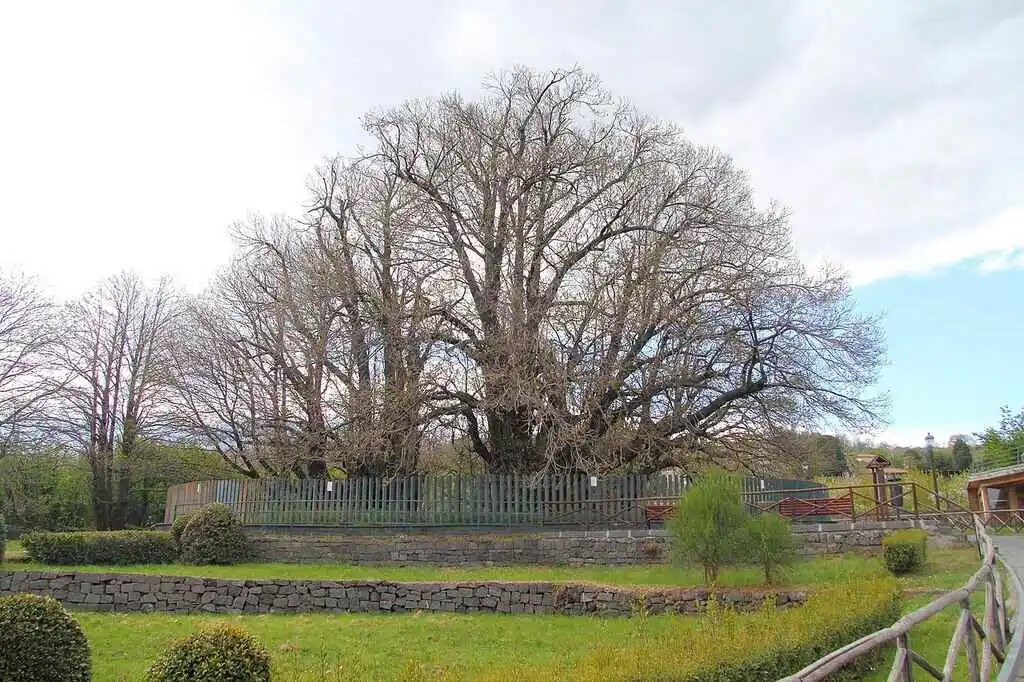
The tree derives its name from a legend recounting a tale of a queen of Aragon and her retinue of 100 knights who sought refuge under this tree during a fierce thunderstorm while on a journey to Mount Etna.
The Hundred-Horse Chestnut can be found on Linguaglossa road in Sant’Alfio, Sicily. It holds the distinction of being the largest and oldest known chestnut tree worldwide. Positioned merely 8 kilometers away from the crater of Mount Etna on the mountain’s eastern slope, this ancient tree is estimated to be around 2,000 to 4,000 years old.
Guinness World Records recognizes the Hundred-Horse Chestnut for having the “Greatest Tree Girth Ever.” It was measured to have a circumference of 57.9 meters in 1780. Over time, the tree has split into multiple large trunks above ground while still sharing the same underground roots.
4. Italus: The Oldest Tree in Europe

An extraordinary Heldreich’s pine (Pinus heldreichii) has been discovered, flourishing for an impressive span of over 1,200 years, in a secluded area of Pollino National Park in the Southern Italian provinces of Cosenza, Matera and Potenza. The tree was given the name “Italus.”
Italus is a rugged pine tree that has been scientifically dated as the oldest tree in Europe, thriving on a rocky slope high in the mountains of the national park. Only three additional specimens identified by researchers are believed to be over a thousand years old.
5. The Italian Tree King

Located within the Vallombrosa Forest in Reggello, part of the Metropolitan City of Florence, Italy’s tallest tree has been unveiled as “The Italian Tree King.” This peculiar tree is a majestic Douglas fir reaching an impressive height of about 205 feet. Another nearby fir, situated just a short distance away, claims the second spot with a height of approximately 196 feet.
To grasp the impressive height of these two trees, consider that the Leaning Tower of Pisa stands at 187 feet, Giotto’s Bell Tower in Florence reaches about 279 feet, and a 20-story building typically measures around 197 feet in height.
6. Pinocchio’s Oak

Located in the Villa Carrara Park in San Martino in Colle, Capannori, part of the Tuscan province of Lucca, there stands an awe-inspiring ancient oak tree known as Pinocchio’s Oak, which served as an inspiration for Carlo Collodi when he wrote The Adventures of Pinocchio.
The tree served as the backdrop for pivotal scenes, including Pinocchio’s encounters with the Cat and the Fox, as well as his perilous hanging by bandits in their attempt to steal his gold coins, ultimately leading to his rescue by the Blue Fairy.
With a history spanning 600 years, Pinocchio’s Oak is steeped in legends. It was believed to be a gathering place for witches who conducted their rituals and danced upon its branches. The flattened shape of the tree, unusual for its kind, was attributed to the repeated presence of witches on its foliage.
In 2012, the legendary oak tree was designated as a national monument.
7. Bolgheri Cypresses

Count Guido Alberto commissioned the majestic cypress trees to line the road, lending it a distinguished atmosphere. It gained prominence thanks to “Davanti San Guido,” a celebrated poem by the famous Italian poet Giosuè Carducci, who resided there for an extended period.
These ancient cypress trees – 2,540 in total – make up the Viale dei Cipressi (“Boulevard of Cypresses”) in Castagneto Carducci, Livorno. The tree-lined road spans 5 kilometers and connects the Oratory of San Guido to the historic center of Bolgheri. It was built in the 19th century as a perpendicular route branching off from Via Regia, boasting a straight path adorned with two rows of these famous cypresses.
8. The Pines of Rome

Also known as the Italian umbrella trees, the pines of Rome leave a lasting impression with their distinct appearance. These magnificent trees feature tall trunks that branch out into a broad, flat canopy, making them easily recognizable in the city of Rome, Italy. They also go by the names stone pines, umbrella pines, or parasol pines.
The pines of Rome, or their ancient predecessors, were introduced to Italy by Greek immigrants. According to Plutarch, these trees held sacred significance, initially associated with the fertility goddess Cybele and later with Neptune, the god of the sea.
These pine trees are native to various regions across the Mediterranean. Benito Mussolini introduced and planted them in Rome, aligning them in long rows along the city’s avenues. These impressive trees can be admired along the Via Dei Fiori Imperiali and the Via Appia, creating a visually striking scene that captivates visitors.
9. The Red Oak of Montale

While only the stump remains today, the Red Oak of Montale was once among the largest trees in Milan. It was a northern red oak species from North America, named after Eugenio Montale, one of Italy’s most famous poets and the Nobel Prize laureate in Literature in 1975. Legend has it that this oak received its name because it was Montale’s favorite spot, where he used to read and write.
The once majestic tree stood as one of the city’s grandest natural wonders. The stump we see today bears witness to an impressive estimated age of approximately 200 years. It remains one of the most recognized monumental trees in Italy.
10. The Upside-down Fig Tree of Baiae

In the ancient ruins of Baiae, close to Bacoli, in the Metropolitan City of Naples, you can find a botanical curiosity. It’s a peculiar tree, an upside-down fig that grows inverted, pointing toward the ground. It’s a truly uncommon sight.
The origin of its placement and the duration of its growth remain shrouded in mystery. It is said to have originated from Emperor Nero’s private villa, emerging from the arch’s ceiling. Nevertheless, what is certain is that despite its unusual orientation, the fig tree of Baiae continues to flourish with each passing year, occasionally bearing fruit.
The common fig tree is historically significant, being one of the earliest plants cultivated by humans. Fossilized figs have been dated to 9400 BC. Hence, the presence of this gravity-defying tree in the ancient Roman town of Baiae seems fitting.
Although fig trees typically thrive in dry and sunny environments, their resilient roots and ability to thrive on minimal water allow them to prosper even in inhospitable locations, as demonstrated by the famous upside-down fig tree of Baiae.