
Iconic and no doubt famous. That is the rich Italian cuisine well-known anywhere in the world. Whether you’re an Italophile or not, we can agree on one thing: cucina italiana is peerless!
This Mediterranean cuisine consists mainly of the ingredients, recipes, and culinary techniques developed across the Italian Peninsula since antiquity. The influence has later spanned all over the world along with waves of Italian emigration.
The popularity of Italian food is undeniable. From pizza to lasagna, carbonara, gelato, truffles, and tiramisu – even kids know these foods.
Wherever you are in the world – touring around Italy or stuck in your home country, let’s guide you to the best of Italian foods you should partake in.
18 Iconic Italian Foods We Love

Here are 18 iconic Italian foods we love and which make make Italian cuisine so popular.
1. Pizza
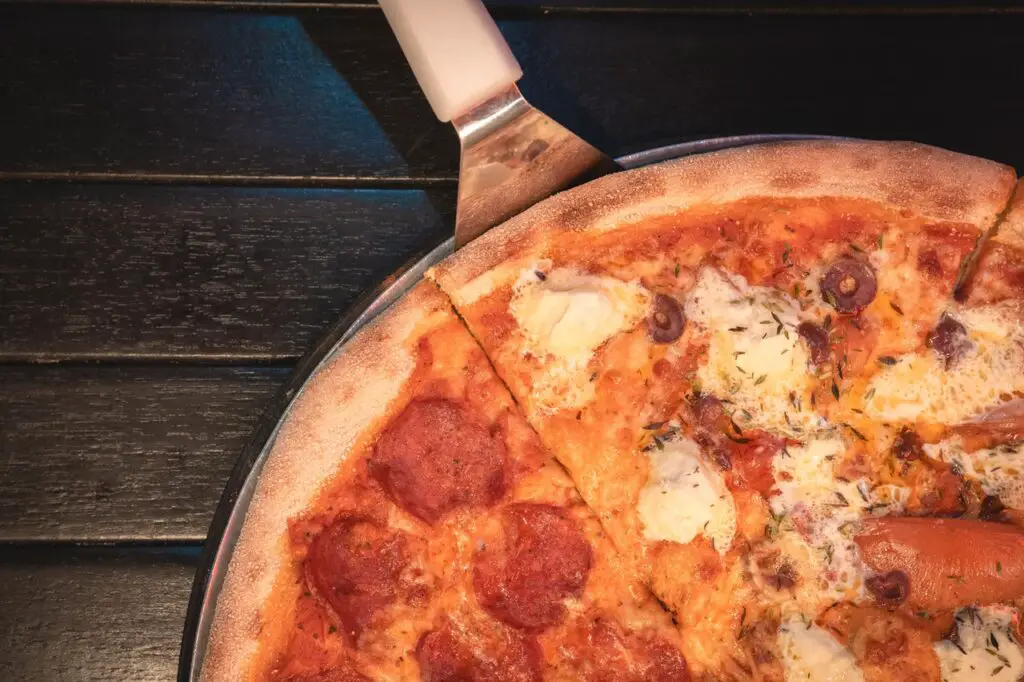
You probably know that pizza is considered the food that represents Italy to the world. It’s on paper. The Neapolitan pizza is recognized by UNESCO as an Intangible Cultural Heritage of Humanity. Rome even created the largest pizza in 2012. How about that for “toppings”?
Modern pizza came from Naples in Southern Italy, evolving from similar flatbread dishes in the 18th or early 19th century. The first document on the word “pizza” is in 997 AD in Gaeta, and then in various parts of central and southern Italy.
Pizza’s main ingredients are dough, sauce, and cheese. This very iconic Italian dish varies more on toppings.
Although tomato sauce is the commonly used sauce, toppings are dependent on the place where the pizza originall came from.
The dough crust is either thick or thin but the Neapolitan style is usually thin as it is hand-tossed. The pizza margherita is one of the most popular with just tomatoes, mozzarela, and basil leaves. The popular Sicilian-style pizza, which is the sfincione, has a thick crust.
Mozzarella is the cheese often used on toppings but parmesan and pecorino are also on top of the list. With mushroom, pepperoni, black olives, green pepper, and cured ham, your pizza journey is endless.
Mini pizza is called pizzeta, while pizzaiolo is the name for the pizza maker, and the restaurant that specializes on pizza is the pizzeria.
2. Lasagna

What used to be “poor man’s food” is now the classic dish loved all over the world and one of the foundation of Bolognese cuisine.
Lasagna is made of wide sheet-like egg pasta layered and filled with ragù or meat and tomato sauce, besciamella (béchamel sauce), and mozarella cheese as toppings.
Lasagna’s white version is without tomato sauce while vegetarian lasagna is available, too, as meat is replaced with vegetables. Wait till baked and enjoy the comfort it brings you.
3. Carbonara

We have the Romans to thank for white spaghetti.
Carbonara is a pasta dish from Rome, its modern form with its current name arriving in the middle of the 20th century.
The ingredients of the carbonara sauce may be confusing. Traditionally it uses no cream but actually eggs and cheese, and guanciale or pancetta, and black pepper. The cheese may be Pecorino Romano or Parmigiano-Reggiano – or a mixture of both. Parmesan is also a popular choice for carbonara.
Spaghetti is the most common pasta ingredient when making carbonara, but other pasta are used as well. Fettuccine, linguine, rigatoni, and bucatini are the popular substitutes to the traditional spaghetti. Penne can be used, too.
For the meat component, guanciale and pancetta can be replaced by smoked bacon. Other variations include adding cream if you desire, or garlic and vegetables as well.
Carbonara is truly an iconic food in the Italian cuisine. A simple dish yet once ingredients are substituted, it will create a great difference on the taste. Your taste bud can surely tell.
4. Risotto

Risotto is an iconic dish from the northern part of Italy.
This creamy rice dish with cheese is slowly cooked until it achieves the perfect consistency. It’s long to cook since you don’t just boil the rice but toast it and nuance it with wine while adding broth from time to time.
Although Italians are not really a fan of eating rice, they produce iconic varieties like the Arborio, Carnaroli, and Vialone Nano. These kinds of rice are just best for your risotto recipe.
Risotto is one of the most common ways of cooking rice in Italy. Among the most popular kinds is risotto alla milanese with its vibrant yellow color.
5. Tiramisù
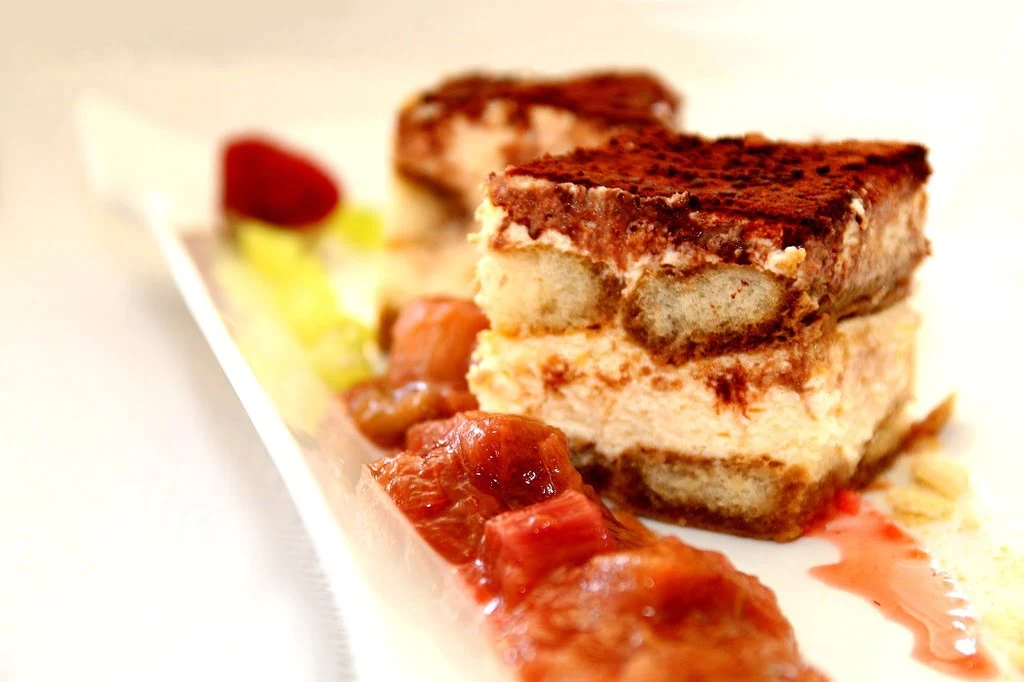
“Pull me up,” “pick me up,” or “cheer me up.” Either way, it means tirami sù.
Where the iconic light and creamy tiramisù originated in is often disputed between the two northern Italian regions of Veneto and Friuli-Venezia Giulia.
Said to have an aphrodisiac effect, tiramisù is no wonder the favorite after-dinner dessert of many. Made of layers of mascarpone cheese and lady finger biscuits soaked in coffee and put alternatively with eggs and sugar, then topped with cacao powder, you don’t need to bake this dessert.
If you are a tiramisù enthusiast, you might be interested to visit the Tiramisù World Cup held in the Venetian city of Treviso or attend Fresh Pasta and Tiramisù Cooking Class in Rome. Who knows, the next best tiramisù might be yours!
6. Polenta

Another choice for you to eat when in Italy aside from pasta is polenta, a cornmeal porridge.
This iconic Italian dish is made of yellow or white stone-ground corn or buckwheat – or a mixture of the two. This corn flour-based recipe can be made into baked loaf, mushed, fried, or grilled – preferably without seasoning.
Polenta is frequently referred to as “Italian grits” because like grits, this porridge has a grainy texture.
Polenta originated in Northern Italy where it was essential to many peasants and working class families – a simple yet satisfying dish. In those days, it was often made with more than just corn but also beans and legumes.
Polenta is traditionally poured and let cool and harden in a large wooden board before cutting it into portions with string.
Polenta can be paired with saucy dishes or meat, butter, cheese, and even fish. Polenta con spuntature e salsiccia or polenta with tomato sauce, sausage, and pork spareribs is one of these pairings. It is a classic Roman cuisine.
7. Prosciutto

Cured meat is one of Italy’s specialties. No wonder prosciutto is popular in and out of the country.
Pork or wild boar’s leg can be used in making this thinly sliced meat. Hind leg of other animals like a lamb can be used as well, in which case the product is named prosciutto d’agnello or lamb prosciutto.
Prosciutto can be consumed as appetizer or sandwich filling, paired with pasta, and wrapped around cheese. You can also serve it as main course.
While some of the ingredients in making this uniquely flavored ham are vary in different regions of Italy, the best ones are arguably made in the north. One of them is the most famous prosciutto di parma that hails from the Parma province of Emilia-Romagna region.
- Also read: 12 Most Popular Types of Italian Cured Meats
8. Parmigiana

Vegetable lovers will surely love this iconic Italian dish that’s made of eggplant. It’s the parmigiana di melanzane or melanzane alla parmigiana, or simply parmigiana (eggplant parmesan).
Said to have originated in Campania and Sicily, parmigiana is cooked through baking. The sliced eggplant is breaded and fried in a pan, layered with tomato sauce, basil, garlic, and lots of mozzarella cheese.
The parmigiana from Naples uses zucchini or artichokes instead of eggplant.
This dish has crossed oceans and borders, resulting in different varieties outside the country. These include parmigiana with other vegetables, or chicken, veal, and other meat cutlet.
9. Gnocchi

If you’re a fan of dumplings, you will surely want to try this one.
Gnocchi are very popular dumplings in Italy as they are simple and easy to make. This dumpling is made from potatoes, although in the Roman times it was a traditional pasta.
There may be different versions of gnocchi all over Italy but potato gnocchi is the most popular one. These gnocchi are made of potato, semolina and wheat flour, breadcrumbs, cornmeal, egg, cheese, and some herbs and vegies. They are formed into cork-size lumps of dough, cooked through boiling in water, then serve with sauce like tomato.
Gnocchi can be a replacement for soups or pasta as first course or as side dish. Famous variety of gnocchi can be found in Lombardy, in the north of Italy. The gnocchi alla sorrentina are ones you won’t regret eating since they are so cheesy and creamy with lots of mozzarella.
Gnocchi means “lumps” in Italian, as in gnocchi di pane which is literally translated as “bread lumps.” The word gnocchi may have come from “nocchio,” meaning “a knot in wood,” or from “nocca,” the Italian word for “knuckle.”
10. Gelato

This all-year-round iconic dessert in Italy is the kind that you would not want to miss.
Although known as ice cream, there are differences between the two. Gelato has fewer fats compared to ice cream as well as more milk than cream. While ice cream is volumed up by adding air and water, gelato has higher density. It is sweeter and more flavorful, too, since it uses fresh fruits and nut purées.
You can enjoy gelato in cups or in waffle cones – and it comes in every flavor imaginable! Want to try cipolla gelato? That’s right, it’s onion gelato! You can taste the most delectable authentic cipolla gelato in Italy’s capital of red onions in the Calabrian town of Tropea, one of the best non-touristy Italian towns you should visit before they get too crowded.
The best gelaterias in Italy are found in Florence, Milan, and Rome. You can carry a gelato as a choice for snacks, best aftermeal dessert or as you stroll along Italy’s great places to visit. You can’t refuse this healthy and yummy frozen dessert!
11. Espresso

Drink your coffee – the espresso way.
Espresso is an iconic Italian way of brewing coffee, a concentrated one served in shots. Served in shots but sipped slowly.
There are various kinds of coffee that can be made into espresso. The best kind of espresso is from the best coffee and roast, naturally. It is thicker than other ways of coffee brewing with a thickness of warm honey.
Espresso contains more caffeine, thus, serving in small amount also means less caffeine in it.
Espresso is also used as base for various coffee drinks like caffè latte, cappuccino, flat white macchiato, mocca, and caffè Americano.
It was invented in Italy in 1901. “Espresso” translated literally means “express.” The purest form of coffee, it is key to understanding Italian coffee culture. It has been around in Italy since 1901.
Enjoy the best espresso when it is served right away from the espresso machine any time of the day.
Also read:
12. Biscotti

Did you know that according to myths, Christopher Columbus had biscotti with him in his journey to America?
If you love biscuits or cookies, you will surely love biscotti di Prato or simply biscotti, the iconic Italian food from the Tuscan city of Prato.
These historic pastry, also known in Italian as cantucci, are almond biscuits that are twice-baked and best eaten dipped in the Italian dessert wine called Vin Santo (“holy wine”). They are oblong-shaped, crunchy, and dry.
Biscotti are made with flour, sugar, eggs, pine nuts, and unroasted almonds with skin. They are baked two times – for slab shape and for cutting form, then for the hardness of the biscotti as finished product.
Biscotti are great for snacks paired with coffee or espresso but best with wine, especially Vin Santo as mentioned, as well as Marsala wine.
13. Ravioli

The stuffed pasta ravioli means “little turnips,” from the Italian rava which means “turnips.”
Usually served in broth or with a sauce, ravioli are commonly square-shaped although they are also made in other forms such as circular and semi-circular. The latter is called mezzelune, a regional delicacy in South Tyrol, where it is also known as Schlutzkrapfen.
Ravioli have been around since the 14th century or earlier. This iconic Italian food is traditionally homemade, with the filling varying as per where they are prepared.
For instance, ravioli in Rome are filled with ricotta cheese, spinach, nutmeg, and black pepper. In Sardinia, the filling is made up of ricotta and grated lemon rind. Fish is sometimes also added as filling.
14. Tortellini
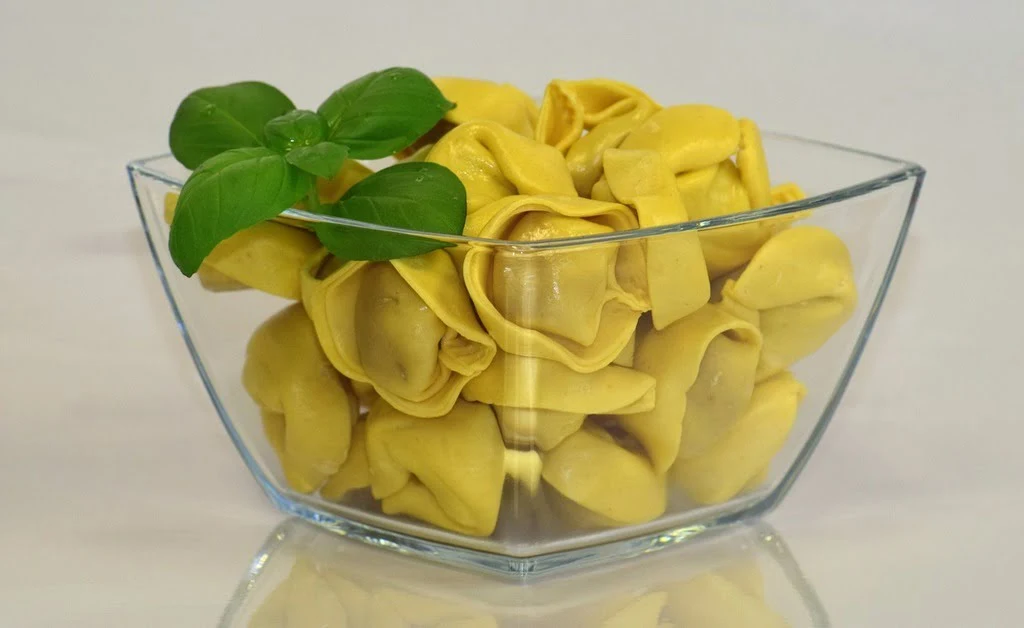
The term “tortellini” is a diminutive.of the Italian word torta which means “cake.” Tortellini literally means “small little pies.”
This dish, disputed to have originated in Bologna or Modena, is traditionally stuffed with a mixture of meat, egg, nutmeg, and Parmigiano Reggiano cheese, then rolled and formed into small rings.
The basic shape of this iconic Italic food comes in a variety of sizes. Tortellini are the smallest; the medium-sized ones are called tortelli; and the largest, tortelloni.
The meat used in this dish may be raw prosciutto, pork loin, or mortadella. These “little pies” are served in brodo di cappone (capon broth).
According to a legend, tortellini’s creation is inspired by Venus. As the legend goes, Venus is staying at an inn where the innkeeper spies on her through a keyhole, allowing him to only see her belly button. This inspires the peeping tom to make a pasta in this shape. This explains the term “ombelico di Venere” (Venus’ navel) that is occasionally used to refer to tortellini.
15. Bruschetta

An appetizer or snack made of grilled bread rubbed with garlic and with variations toppings ranging from olive oil and salt to mozzarella cheese, basil, beans, tomato, vegetables, and cured meat.
The name “bruschetta” is from the Italian “bruscare” which means “to roast over coals,” as an authentic bruschetta is traditionally prepared in a special grill called brustolina.
Bruschetta’s origin can be traced back to Ancient Rome. Olive growers accidentally invented bruschetta after tasting a sample of their olive oil product on a slice of bread.
16. Panini
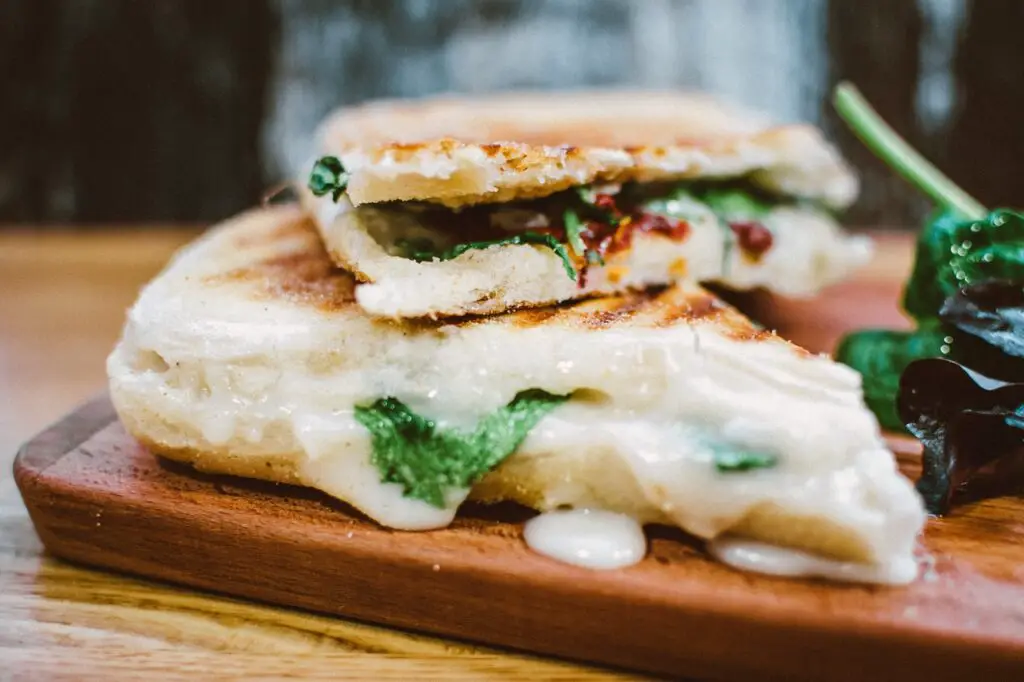
Panini are also called panino or panino imbottito. The term “panini” means “small bread,” “bread rolls,” or “sandwich” in Italian, while panino imbottito is Italian for “stuffed panino.”
Panini is a type of stuffed sandwich made with toasted or grilled Italian bread such as michetta and ciabatta. Panini can be stuffed with caprese salad, chicken, turkey, and many others.
Panini’s pleasant texture is thanks to grilling, which makes this sandwich more enjoyable. Vegetarians can enjoy one by replacing the meat stuffing with vegetables of their choice.
17. Italian Salami
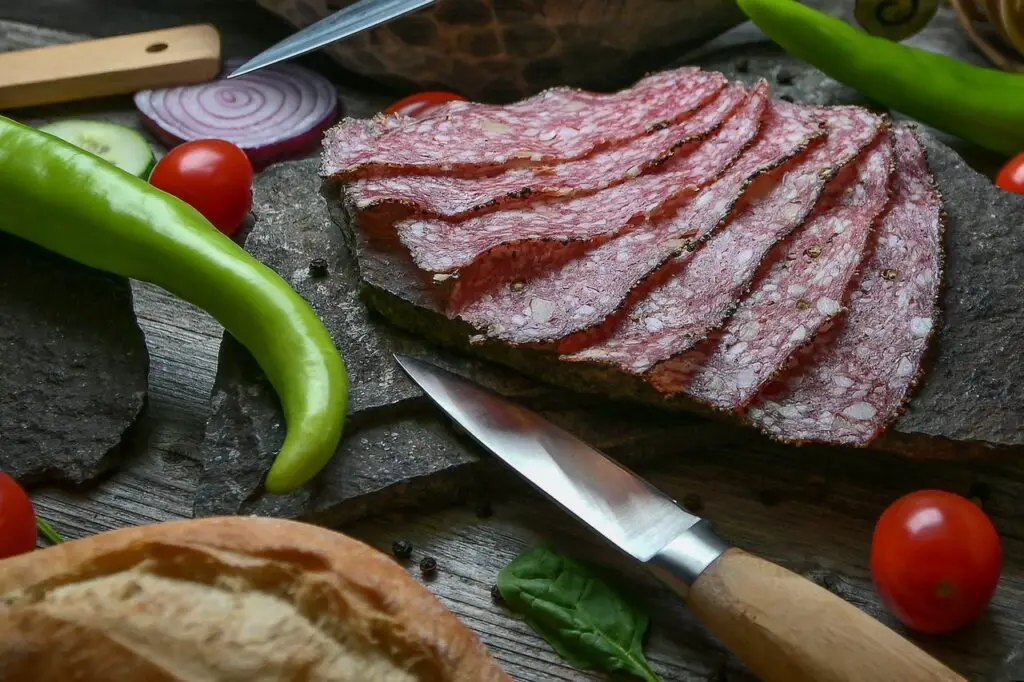
Derived from the Latin words salsiccia and salumen which both mean “salted meat,” salami is an iconic food from Italy made of a fermented, air-dried pork or beef meat.
The best Italian salamis are formed from preparation of the best raw materials to fermentation and then ripening and drying. They will keep stable for a long time for their low water activity and the preservatives, colorings, flavorings, antioxidants, and acidifying cultures they contain.
Iconic salami types in Italy are the ciauscolo from the Marche region, finocchiona and fegatelli from Tuscany, salame Felino from Emilia-Romagna, and the spreadable ‘nduja from Calabria, as well as the Napoletano and Milanese.
18. Spaghetti al Pomodoro

The word “spaghetti” comes from spago, meaning “thin string” or “twine.” “Spaghetti” is the plural form of its diminutive “spaghetto.”
A staple food of traditional Italian cuisine, “spaghetti” is the name of the pasta used for the spaghetti dish. They are long, thin, solid, and cylindrical in shape.
The spaghetti pomodoro dish is made with fresh tomatoes or tomato sauce (pomodoro being Italian for “tomato”), olive oil, ground meat and/or salami, and herbs like oregano and basil.
Authentic Italian spaghetti dish doesn’t have meatballs in it.
If you liked this article, you will also enjoy reading about the superb traditional Italian dishes that are not pasta or pizza!

ALSO READ:

• 14 Best Italian Breakfast Foods To Start Your Day Off Right

• 14 Best Italian Street Foods To Try in Italy