
There is history to discover, art to admire, and food to try in each of the 20 administrative regions of Italy.
As a tourist destination, Italy is best known for its rich history, distinct culture, stunning architecture, Renaissance art, and great food. First-time visitors often visit the popular cities — Florence, Milan, Rome, and Venice.
But Italy is more than these famous cities.
Spread across the country are diverse landscapes, breathtaking scenery, fairy-tale towns, hillside villages, and beach resorts that are lovely to visit any time of the year.
The 20 Administrative Regions of Italy

If you are visiting Italy soon, we recommend exploring beyond the famous cities by going on day or weekend trips to the surrounding provinces and beyond.
Let’s have a look at these 20 regions of Italy, divided into 3 geographical regions.
Northern Italian Regions
Northern Italy is made of the River Po basin – from the foot of the Apennine Mountains to that of the Alps. The Po Valley that lies between the two mountain ranges is where the vast majority of Northern Italians live.
Here are the 8 Northern Italian regions.
• Aosta Valley

Capital: Aosta
The Aosta Valley, located in the Alps between France and Switzerland, is the smallest region of Italy and also the least populated. Despite its size, however, Aosta Valley surely delivers a visual punch.
In addition to Mont Blanc (Italian: Monte Blanco), which is Europe’s tallest peak, this region is also home to the Matterhorn, Monte Rosa, and the Gran Paradiso. You can choose from a plethora of gorgeous hikes, many of which provide breathtaking views of the surrounding landscape. Locals and tourists alike enjoy mountaineering and skiing as well as other outdoor activities.
While the awe-inspiring mountains and valleys are undeniable, the region also has quaint mountain towns and hillside villages that are worth exploring, like Aosta or Courmayeur.
• Emilia-Romagna

Capital: Bologna
The Emilia-Romagna region is best known for the city of Bologna and its famous Porticoes, a UNESCO World Heritage Site, which is just one of many you will find in Italy.
When it comes to architecture, Emilia-Romagna is where Renaissance and medieval history collide. Parma, Ferrara, Ravenna, and Modena, are all must-visit cities notable for their palaces, museums, expansive plazas, and Renaissance heritage. On the Adriatic coast, meanwhile, Cattolica and Rimini are two fantastic options for a relaxing vacation.
Emilia-Romagna is also known as a wealthy region with a distinct culinary tradition. Everything from the mouthwatering Parma ham and mortadella to the fresh calamari in the seaside cities to the Modena-made artisanal balsamic vinegar and, of course, the Parmigiano-Reggiano cheese can be found here.
• Friuli-Venezia Giulia
Capital: Trieste

Photo by Diego Delso via Wikimedia Commons
Friuli-Venezia Giulia is distinct from the rest of Italy since it shares a border with both Austria and Slovenia. This unique character is most evident in the city of Trieste, where people of diverse cultures as well as architectural styles all coexist harmoniously.
There are plenty of breathtaking landscapes to explore in the region, which are dotted with mountains, forests, and alpine lakes. Skiing and snowboarding are popular in the winter while hiking and mountaineering are among the best summer activities.
Also must-visit in Friuli-Venezia Giulia are its glorious churches, castles and fortresses, the beautiful small towns and villages, and the Friuli caves.
• Liguria

Capital: Genoa
This crescent-shaped Italian region in the northwest of Italy is home to the world-famous Mediterranean coastline known as the Italian Riviera. Here you can find the very popular Cinque Terre and Portofino, just a couple of the region’s major tourist spots with famous resorts. Seriously, you will never run out of colorful coastal villages to visit in the Italian Riviera!
Liguria is the birthplace of pesto, so you might as well sample their pesto-based dishes such as trofie (which is another Ligurian original) while there.
• Lombardy

Capital: Milan
Many lovely northern lakes and the city of Milan make up Lombardy’s little territory in the extreme northeast corner of Italy.
The region’s capital is Milan, the epicenter of high fashion, a hotbed of nightlife, and a rich cultural heritage. One of the world’s most famous paintings, Leonardo da Vinci’s The Last Supper — which hangs on the dining room wall of Milan’s Santa Maria delle Grazie Cathedral — is a must-see in Milan. The city is also a haven for shoppers.
To the north of Milan, you’ll find some of Italy’s most beautiful lakes and rivers to explore. Even if Lake Como is the region’s most well-known tourist destination, it’s not the only option for those looking for a relaxing place to spend a day or weekend in. There is also the country’s largest lake, Lake Maggiore, as well as smaller, more tranquil lakes like Lake Idro and Lake Iseo which are excellent for cruises.
• Piedmont

Capital: Turin
A haven for foodies and wine lovers, Piedmont’s terrain is made up of broad plains where country farmers produce some of the best food and wine in the region.
Aficionados of the region’s Barolo, Barbera, and Barbaresco grapes will find Piedmont to be an excellent weekend retreat. Since it is the birthplace of the Slow Food movement and its headquarters are located in Bra, Piedmont is a fantastic getaway for foodies.
White truffles from Alba are a must-try, especially during the Alba truffle festival. Additionally, Piedmont is recognized as Italy’s most exquisite and “royal” area, frequently referred to as the “Land of Kings.”
Must-visit in Piedmont is the capital city of Turin, the former capital of the Kingdom of Savoy. Turin is home to historic landmarks such as the Mole Antonelliana and the Royal Palace of Venaria.
Another destination you should not miss in Piedmont is the Isola di San Giulio, a tiny island in the province of Novara, where the 12th-century Romanesque church — the Basilica di San Giulio — is located.
• Trentino-South Tyrol

Capital: Trento
Known as Trentino-Alto Adige in Italian and Trentino-Südtirol in German, this northern Italian region is a mecca for mountain lovers. Home to the famous Dolomite Mountains with its dramatic trails and pretty villages, Trentino-South Tyrol borders Switzerland and Austria.
Apart from its spectacular mountains, fantastic lakes, and stunning landscapes, Trentino-South Tyrol also boasts medieval castles and enchanting villages you can visit any season of the year.
And hey, if there was only one person you could meet in the region, make it Ötzi the Iceman! You can see him at the South Tyrol Museum of Archaeology in Bolzano. Say hi!
• Veneto

Capital: Venice
Veneto is known for its coastal and mountain scenery as well as its art, architecture, and great wine. This is also Italy’s most developed region, receiving more than 50 million visitors each year.
The most popular destination here is the city capital, Venice. Dubbed the “floating city,” Venice is noted for its canals, carnival masks, and independent spirit.
Verona, the setting for Shakespeare’s Romeo and Juliet, is also a popular city to visit.
A region that’s known for its romantic getaways, other things to do in the Veneto region are the Valpolicella area’s exquisite wines; the island of Murano, where handcrafted glass is the local specialty; and again, a canal cruise under Venice’s iconic bridges.
Central Italian Regions
The Appennines run across Central Italy, the country’s most populated area — which Rome is part of.
This geographical region of Italy borders Liguria, San Marino, and Emilia-Romagna to the north; Abruzzo, Molise, and Campania to the south; to the east is Adriatic Sea; and the Tyrrhenian and the Ligurian Sea to the west.
Let’s jump into the 4 Central Italian regions.
• Lazio

Capital: Rome
Situated close to the Tyrrhenian Sea and known as the seat of the Italian government and parliament, Lazio is a must-visit Italian region.
Lazio is also regarded as the center of the Catholic world and a famous tourist destination because of the numerous Roman and Etruscan architectural wonders it has to offer.
The region is best known for its capital city of Rome, with its rich history as a major European capital, and as a bustling metropolis. However, there is more to Lazio than its famous capital, such as the ancient city of Viterbo, located around a hundred kilometers from Rome.
A large part of Viterbo’s architectural landscape was shaped during the Middle Ages and Renaissance when it served as a papal residence.
Tivoli is another must-see for history buffs and architecture enthusiasts alike. This town is a popular day trip for tourists visiting Rome, known for its stunning attractions Hadrian’s Villa and Villa d’Este’s gardens, as well as a medieval fortress, numerous interesting churches, and the ruins of Roman aqueducts.
• Marche

Capital: Ancona
The Italian region of Marche is nestled between the Apennine Mountains and the Adriatic Sea.
Its capital, the port city of Ancona, is a must-visit for anyone traveling in the region, with its limestone cliffs and sandy coves, plus the enchanting medieval villages. The city has been an important trade center since Roman times, with the Emperors Caesar and Trajan fortifying and developing it into a naval base.
If Le Marche’s history, artistic heritage, amazing coast, and awe-inspiring landscapes are not enough, you will surely love this region’s authenticity. Also partake in vincisgrassi, a meat-sauce pasta casserole that’s Le Marche’s signature dish.
• Tuscany

Capital: Florence
Whether you’re looking for fine wine, picturesque hills, or working vineyards, the Italian region of Tuscany is a picture of authentic Italian culture. There is so much to see and do in its capital of Florence, from wandering the city’s historic streets to cycling along country roads dotted with cypress trees.
Aside from Florence, there’s that “leaning tower” in Pisa, a coastal city that you may want to see while in Tuscany. Other must-visit towns are Viareggio, a bustling beach town; Portoferraio, a port city; and Castiglione della Pescaia, a fishing community in the south. These destinations are less well-known, just like the enchanting Tuscan beaches, but they have equally great seafood and pasta dishes.
A must-try is the Chianti, the most famous Tuscan wine varietal. Sangiovese-based wines can be sampled around the region on numerous wine tours or you can visit Barone Ricasoli, where the famous Chianti varietal was first grown some 900 years ago to get a sense of the region’s viticultural roots.
• Umbria

Capital: Perugia
There are many attractive towns and villages scattered throughout the countryside in the central Italian region of Umbria, despite the lack of major cities in this landlocked region. For example, Perugia (a bustling university town with a stunning medieval core) and Assisi (a revered religious hotspot) both provide excellent sightseeing opportunities.
However, the region’s medieval past is not all that Umbria has to offer. There are still mostly unexplored yet fascinating destinations like the beautiful Gubbio town which set on the slopes of Monte Ingino, the amazing art city of Bevagna, and the delightful hillside village of Trevi.
Umbria is also ideal for road trips, with its picturesque countryside that surrounds you on your journey.
Southern Italian Regions
Southern Italy forms the lower part of “The Boot.” The “ankle” is Campania, the “toe” is Calabria, and the “arch” is Basilicata, while Puglia, Molise, Abruzzo, and Sicily make up the “heel.” The island of Sardinia lies on the west of the Italian peninsula, separated by the Tyrrhenian Basin.
Here are the 8 regions of Southern Italy.
• Abruzzo

Capital: L’Aquila
Italy is one of those tourist destinations that’s a joy to visit any time of the year. However, many popular cities tend to get crowded if you’re looking for a relaxing break, braving the crowd seems a bit of a hassle.
Thankfully, there is more to Italy than Rome, Venice, Florence, and Milan. Abruzzo, for example, is a good place to travel if you want to avoid the crowds of tourists.
The Apennine Mountains and the Adriatic shoreline are just some of the natural wonders that can be found in this area, which is located just east of Rome.
If you prefer outdoor activities like hiking, camping, lake excursions, skiing, or water sports, Abruzzo has many protected national parks and nature reserves, such as the National Park of Abruzzo.
Don’t miss out on the region’s famous handmade spaghetti and Montepulciano wine, both of which have been beloved by locals and tourists alike for over 200 years!
• Apulia / Puglia

Capital: Bari
If you’re looking for the perfect Ionian holiday, Puglia might be the one for you.
Bordered by the Ionian and the Adriatic Sea, Puglia (English: Apulia) is fast becoming a popular tourist destination in Italy, thanks to its breathtaking scenery and gorgeous beaches. What sets it apart from the rest is its stretch of coastline, which is the longest in any region of Italy.
Puglia also boasts historic villages surrounded by fairytale-like landscape and città d’arte (cities of art) teeming with magnificent castles and palaces, and Romanesque and Baroque cathedrals and monuments filling every city square.
The trulli in Alberobello and the Itria Valley are a must-visit. Also do not miss Lecce, the old and modern Bari, and Puglia’s White City — Ostuni. Another must-not-miss is Gallipoli, an old coastal town with its historic charm and quiet beaches for swimming and camping.
• Basilicata

Photo by Cerroni via Wikimedia Commons
Capital: Potenza
If you are the outdoorsy type and prefer off-the-beaten-path destinations, you may want to visit the relatively unexplored region of Basilicata.
This huge and rural southeastern Italian region borders Campania, Puglia, and the Tyrrhenian Sea. It’s a great destination for nature-lovers because of its beautiful forests, lakes, and countryside.
One of the best spots in Basilicata to observe ancient cave houses is Matera, which is a must-see for everyone visiting the region. Rock-cut residences, churches, and other structures are featured in the historic Sassi di Matera — one of Europe’s most unique landscapes.
• Calabria
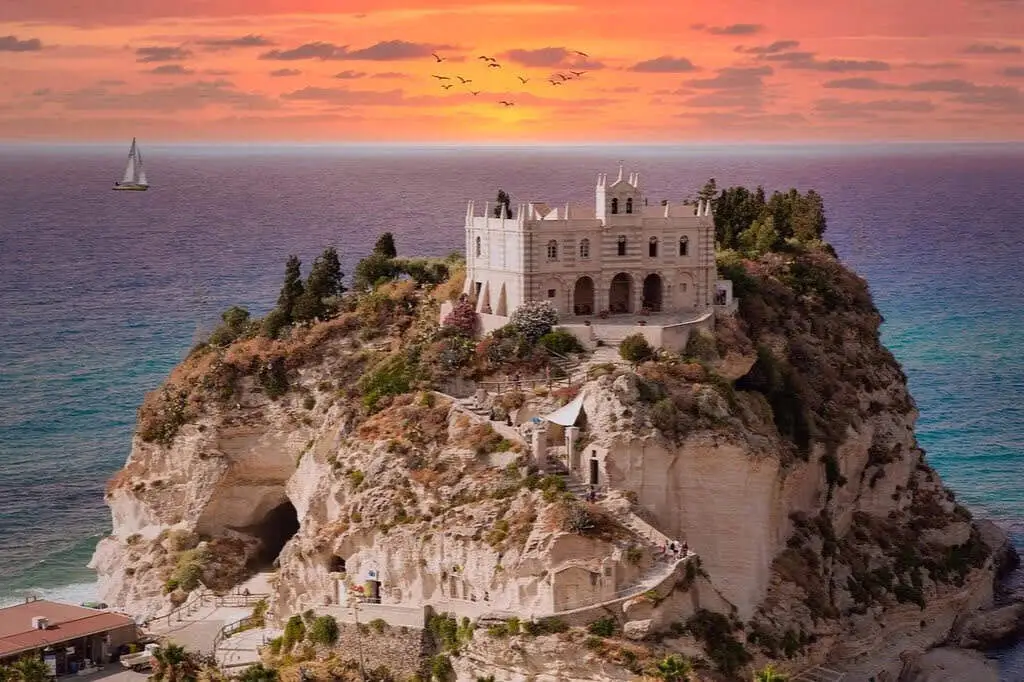
Capital: Catanzaro
Southwestern Italy’s Calabria region is at the “toe” of The Boot. It’s a sunny region that boasts rugged mountains, old villages, and stunning coastline dotted with plenty of nice beaches.
You should visit Calabria’s largest city, Reggio Calabria, for the Museo Archeologico Nazionale and its Riace Bronzes.
The region’s sprawling beaches along the Tyrrhenian and the Ionian Seas, paired with their awe-inspiring cliffs, coves, and impressive rock formations are the perfect destinations if you want some good tan! Tropea should be on top of your list.
• Campania
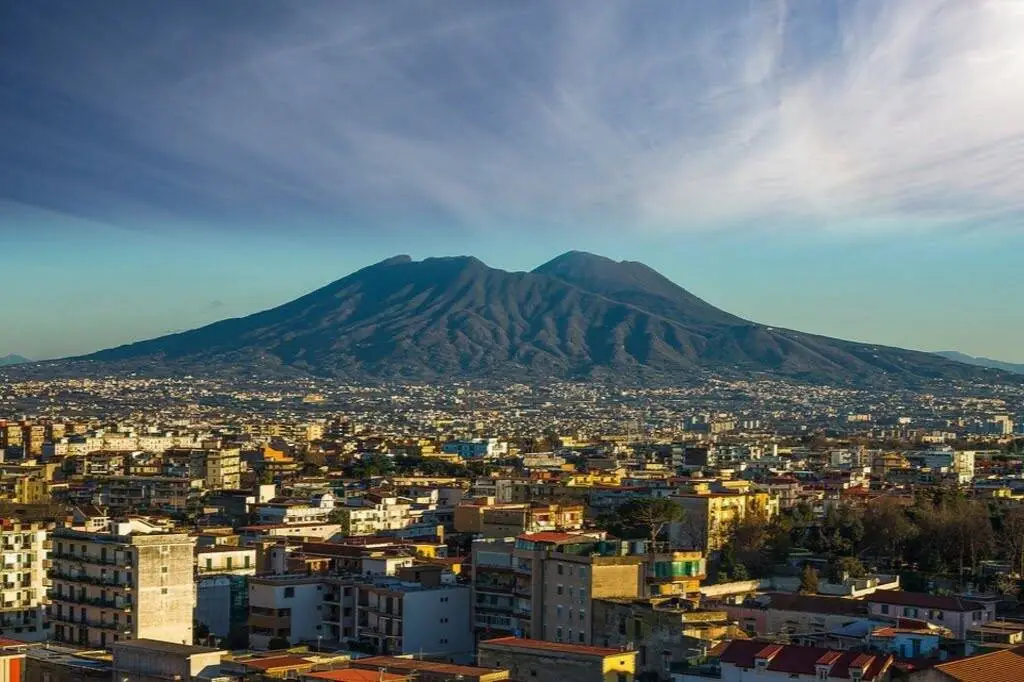
Capital: Naples
Located on the Tyrrhenian Sea’s southern shore, Campania is one of Italy’s most popular and well-known seaside attractions. The Amalfi Coast, Naples, Sorrento, Capri, and the ruins of Pompeii have all made the region a popular destination for adventure lovers, history buffs, and royalty from across the world.
Campania is Italy’s second-most populous region, which is also known for its delectable cuisine, including pizza that originated in Naples.
Other must-experience activities in Campania are a paradise for trekking on Mt. Vesuvius, scuba diving in the sea, and discovering hidden gems off the beaten path. Avellino is also worth a stop.
• Molise

Capital: Campobasso
Encompassing part of the National Park of Abruzzo in the Apennine Mountains, the mountainous region of Molise is rich in wildlife and trails, with a stretch of coastline on the Adriatic Sea.
Its capital, Campobasso, is noted for its mountaintop Monforte Castle and a number of Romanesque churches. There is also the Pietrabbondante archaeological area where you can find an ancient Samnite theater and temple.
A visit to the fishing town of Termoli on the Adriatic coast is also highly-recommended. Ancient fortifications surround the Borgo Antico di Termoli, or the Old Town. Within the walls you will be amazed by the pastel-colored houses lining the narrow streets. More enchanting hamlets and villages dot the region. Some of the must-visit are Bagnoli del Trigno and Pietracupa.
Although Molise is famous for amazing historic sites that can be compared to Rome, this southeastern Italian region is best noted for its fabulous regional pasta dishes. Must-try when in Molise are fusilli with lamb ragù and cavatelli with broccoli and chili. Fusilli and cavatelli pastas both originated in the region.
• Sardinia
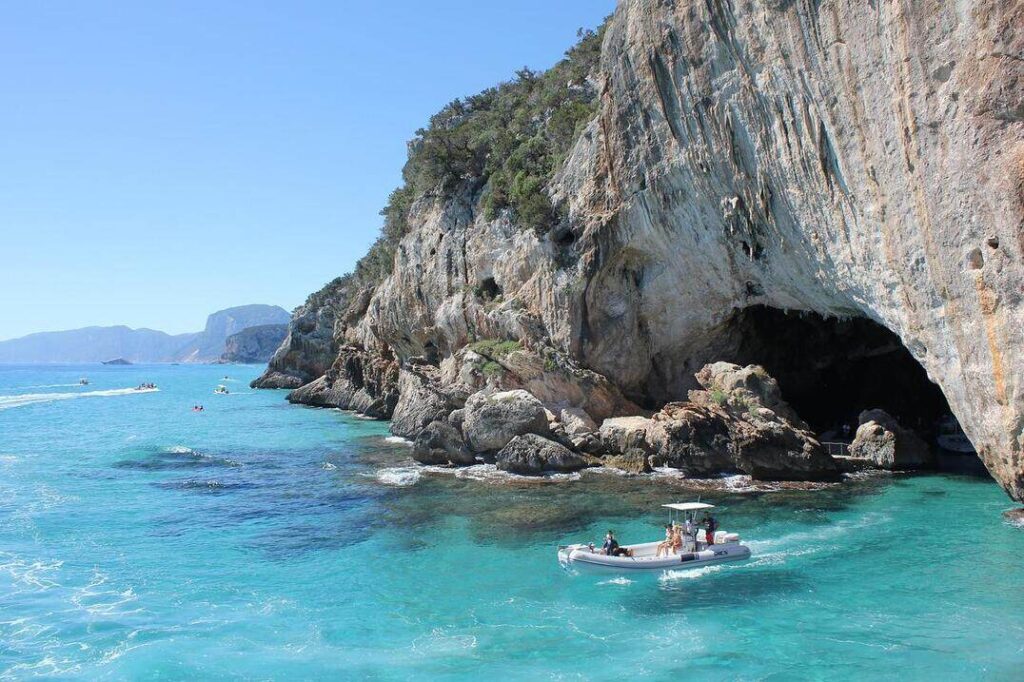
Capital: Cagliari
Sardinia is a stunningly gorgeous island located just south of the French island of Corsica and is surrounded by azure waters. There’s no doubt that its cliffs and stunning coastline are its primary attractions, but Sardinia also has a fascinating mountainous interior.
Due to Sardinia’s Mediterranean climate and a wide variety of landscapes, it is a paradise for outdoor enthusiasts. Swimming, sailing, and windsurfing are all popular activities on the water, and the picturesque terrain is perfect for outdoor adventures like hiking and camping.
You may also want to visit both Cagliari and Sassari, the island’s two main cities. In addition to the island’s stunning beaches, Sardinia has a plethora of small and quaint villages that you may explore if you prefer to avoid the crowds.
• Sicily
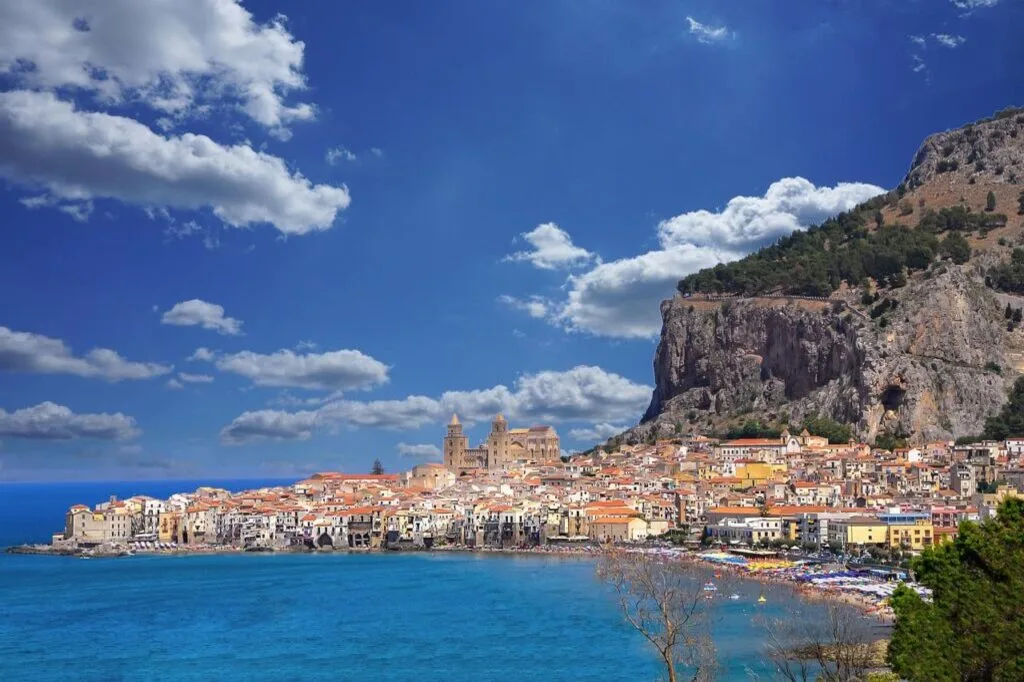
Capital: Palermo
Sicily, a small island off the southern tip of Italy, has a distinct culture from the rest of the country.
Sicily’s lifestyle is the result of a mix of ancient civilizations, including the Greeks and Romans as well as Arab and medieval influences from the Netherlands, France, and Spain.
The island of Sicily has a long history and is home to numerous ancient sites, including the Valley of the Temples, Taormina, Piazza Armerina, and Selinunte’s Temples.
Palermo, the capital of this southern Italian region, is the most well-known attraction in the country. Palermo is a city like no other, renowned for its rich history, vibrant culture, and stunning architecture. Cefalù in the northern part of the region is another must-visit place in Sicily.
The Aeolian Islands, Mount Etna, and the Stromboli volcano are just a few of the many natural beauties that make up Sicily’s topography.
The local cuisine, which includes cannolis, arancini, and pasta alla norma, is a welcome treat after a day spent exploring the great outdoors in the region.