
Do you want to know the Easter traditions in Italy?
The Easter holiday, or Pasqua, the Italian word for Easter, is one of Italy’s most beloved and significant holidays.
But while Easter is a Christian celebration commemorating Jesus’ death and resurrection, in Italy the occasion is observed more as a cultural than a spiritual event.
Traditionally, Easter was celebrated annually on the first Sunday after the vernal equinox full moon. Easter in Italy, as everywhere, begins on Good Friday and continues with celebrations until Easter Monday (“Pasquetta” in Italian).
Even if you don’t have any Italian friends or family with whom to share Easter, there are still many ways to experience authentic Italian culture and have a wonderful holiday. Maybe you’re spending Easter in Italy, or just want to know how Italians observe this special holiday. Whatever your reasons are for wanting to know about Easter traditions in Italy, we have a handy guide for you.
Easter Traditions in Italy

Keep reading to learn about some fascinating Easter traditions in Italy that you might wish to experience for yourself.
1. Italian Traditional Easter Decorations
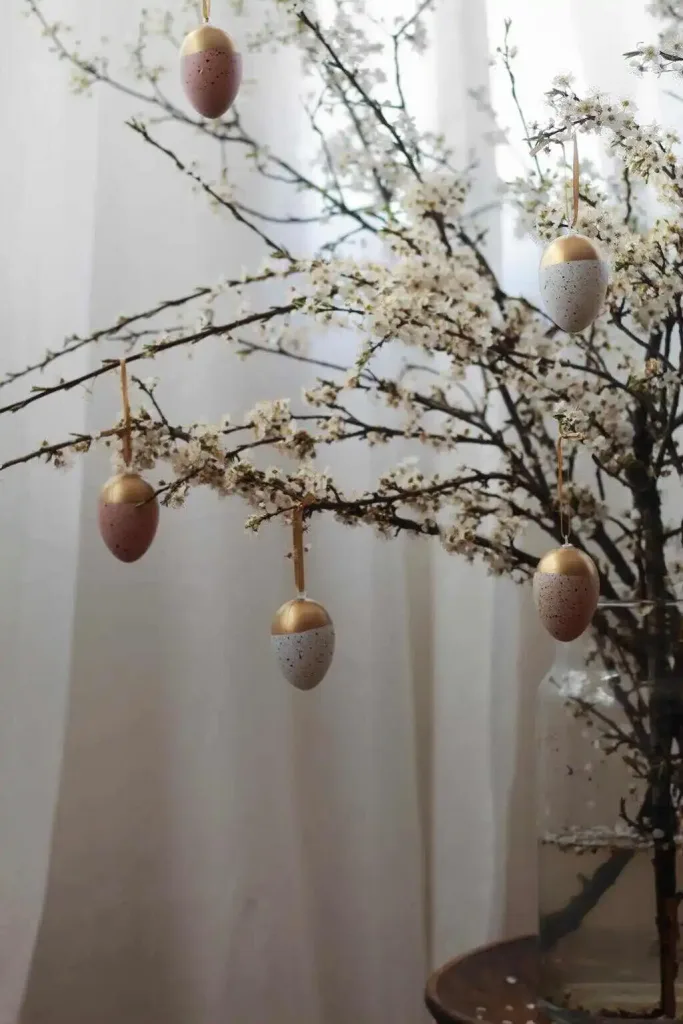
Just like Christmas, many Italians get their homes ready for Easter by decking them out in brightly colored décor.
La decorazione, or the decoration/ornament. No Easter is complete in any Italian home without la decorazione.
The following are some of the items that are most likely to be present in every house in Italy during the Easter holiday below.
• L’Albero di Pasqua
L’Albero di Pasqua, or the Easter Tree, is an olive branch embellished with hand-painted eggs, bright bows, and paper doves.
• La Candela a forma di uovo
La Candela a forma di uovo is the egg-shaped beeswax candle in a dyed beeswax that makes a colorful shell.
• L’uovo di ceramica
L’uovo di ceramica is the egg made of ceramic. You can come across pottery eggs in a wide variety of dimensions, hues, and purposes.
• Il lavoretto di Pasqua
These are some of the Easter projects the kids did in class. Undoubtedly, parents take enormous pleasure in displaying their children’s handiwork.
2. The Egg and the Lamb at Easter

In Italy, there are no Easter bunnies. Instead, lambs and eggs are two of the most prominent emblems of the occasion.
For countless civilizations, the egg has symbolized the beginning of life itself and thus represents Jesus’ triumphant return to life in the Christian tradition. This alludes to the fact that he was able to escape the tomb alive and that now it appears to have been used for burial purposes but has since been vacant.
As a result, eggs can be found in a wide variety of dishes, from appetizers to desserts.
Lamb, meanwhile, is the second main Easter symbol. Both Jews and Christians use the lamb as an emblem. Moses and the Israelites offered one as a sacrifice to God on the eve of the Exodus, and Christians refer to Jesus as “the Lamb of God” because of his sacrifice for humanity.
3. Pasquetta
Italians have a “Small Easter,” or Pasquetta, which is celebrated the Monday after Easter.
A cherished Italian springtime tradition, this event is a time for friends and family to gather together and have fun.
The entertainment and food offered change with the region. Big wheels of cheese are rolled around a track in the Umbrian town of Panicale for the game known as ruzzolone.
Meanwhile, several communities hold egg-related events that are reminiscent of the Easter Egg Hunt. Yet Panicale, a town in the hills of Umbria, is not known for its eggs; rather, it is famous for its cheese. The winner is the player who, with the fewest possible strokes, successfully wraps their cheese around the wall.
However, not everyone is interested in participating in the activities their community plans. With the leftovers from the Easter weekend feasts, Italians pack a picnic and enjoy the outdoors at parks, beaches, or vineyards with their loved ones. This is much like the British do with turkey sandwiches on Boxing Day.
For those who want to celebrate Pasquetta away from the usual community traditions, there are day trips and excursions from Italy’s major cities that are perfect for those who want to spend a special day outside.
4. Easter Food

It is customary to prepare extravagant meals for the Pasqua and Pasquetta celebrations, as is the case with other Italian festivals.
Italian Easter food typically features rich, hearty dishes to celebrate the end of Lent.
There is a wide variety of traditional Italian Easter foods, from the salty cheese bread called “torta di Pasqua,” which is sprinkled with holy water, to the dove-shaped cake called “La Colomba,” which is covered in a candied orange peel and almond sugar glaze.
The major meal on Easter is a lunch that honors the flavors of spring. Common seasonal ingredients include wild asparagus, tagliatelle with rolled eggs, roasted lamb, new potatoes, artichokes, fennel, and broccoli rabe.
Easter desserts, meanwhile, include the 6-foot chocolate Easter egg known as l’uovo di Pasqua and a variety of cakes.
Easter leftovers are supposed to be used for Monday’s picnic, which is called Pasquetta. Frittatas, eggs, and quiches are just a few of the many egg-centric dishes that can be found on the menu at Pasquetta, along with pasta, calzones, and red wine.
5. Easter Traditions in Various Cities and Regions in Italy

• Madonna Che Scappa in Piazza Abruzzo Region
Easter Sunday is celebrated in Sulmona, which is located in the Abruzzo region, with the Madonna che scappa in piazza (“Madonna running in the square”).
On the holiday, people congregate in the principal piazza while dressed in green and white, which are symbolic colors of peace, hope, and resurrection.
The actress portraying Mary, Virgin wears all black for her costume. When the woman walks toward the fountain, a number of doves are suddenly released, and she abruptly changes into a green outfit.
This is followed by music, food and dancing.
• Florence
In 1096, a Florentine knight named Pazzino di Ranieri de’ Pazzi returned from the Crusades having raised the banner of the Holy Cross in Jerusalem. The Sacred Sepulcher of Christ gave him three flints as a token of their gratitude for his bravery.
When he returned to Florence, the stones were placed in the sacred fire for the Easter Vigil and carried through the streets. This event – known as La Fiesta del Carro or Scoppio del Carro, which literally means “Burst of the Wagon” – has been celebrated ever since.
On Easter Sundays, Florentines gather to reenact the event, with 150 reenactors parading through the streets behind a 30-foot-tall antique cart drawn by a team of white oxen.
Starting at Porta al Prato, the parade makes its way to Santa Maria del Fiore and the Piazza del Duomo. Scoppio fireworks are set off by firing a dove-shaped rocket (La Colombina) with an olive branch at a wagon full of pyrotechnics (the boom).
This annual occurrence is expected to bring about prosperous harvests, peaceful communities, and expanding trade.
• Rome

The city of Rome, where the Vatican State is located, is a major tourist destination for Catholics at this time of year.
Fortunately for tourists to Rome, the city’s other museums will remain open as usual.
After the Pope’s mass at 5 pm on Good Friday, many people gather outside Saint Peter’s Basilica to watch the procession to Via Crucis by candlelight from Palatine Hill. The Pope finishes his walk to the Colosseum after stopping at 14 different locations to pray and reflect on Christ’s journey to the cross.
Even for those who don’t practice religion, this is a fascinating procession to watch. There’s something quite magical in the gathering of numerous pilgrims with torches who follow.
• Friuli-Venezia Giulia
The traditional Via Crucis, also known as the Way of the Cross, is quite well-known in the Friuli-Venezia Giulia region.
However, the Easter tradition that stands out the most — and may be the most peculiar — is the launching of the Cidulis on the night that falls between Easter Sunday and Easter Monday.
Following the setting of a fire that can be seen from the village, burning wooden wheels are hurled at one another. Following that, a hilarious or inspirational rhyme is recited to the audience.
This Italian Easter tradition was adapted from the Celtic culture, where it originated.
• Sicily
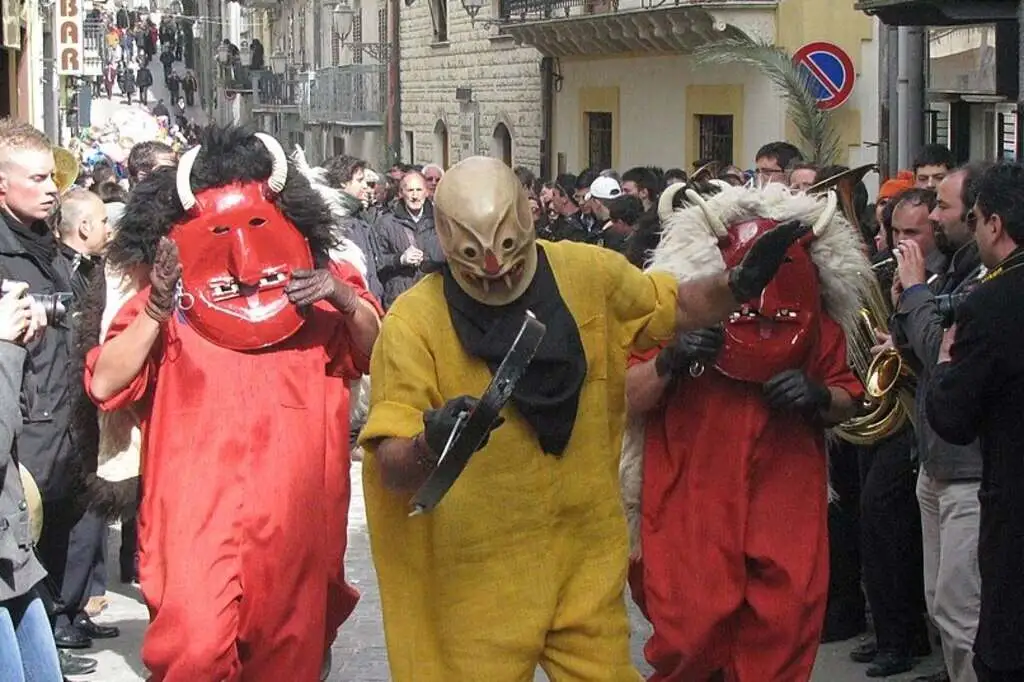
Photo by Carmelo Giuseppe Colletti via Wikimedia Commons
The village of Prizzi in Sicily is home to a unique Easter tradition known as Il Ballo dei Diavoli, or the Devils’ Ball, which straddles the line between the sacred and the profane.
The festival features performances by actors dressed as death (in yellow) and the devil (in red). These personalities will spend all day causing inconvenience to pedestrians.
The play is supposed to show how Satan and Death strive to stop Mary and Jesus from meeting.
On their third try, while the bells are ringing in triumph, they will be struck by the Angels.
After the devils have been vanquished, they will cleanse their sins by making the sign of the cross three times while bending down in front of sculptures of the Virgin Mary and the resurrected Christ.