
Are you ready to try some superb Italian dishes that are not pasta or pizza?
When we hear “Italian food,” the first things that come to mind are pasta and pizza – the superstars of Italian cuisine. Sometimes double espresso and tiramisu pop up, too, and maybe gelato.
Well, no argument there. These foods are all sinfully delicious. Italian pasta and pizza are world-famous. However, Italian cuisine is so much more than these.
This being so, here are 30 superb traditional Italian dishes that are not pasta or pizza.
30 Superb Italian Dishes (That Are Not Pasta or Pizza)

Let’s jump into our handpicked list of the superb Italian dishes (that are not pasta or pizza) that you must try now.
Also read:
- The Best of Italian Cuisine: 18 Iconic Italian Foods We Love
- 14 Best Italian Breakfast Foods To Start Your Day Off Right
- 14 Best Italian Street Foods To Try in Italy
1. Bruschetta

This is an Italian snack or side dish made of garlic bread with olive oil and salt toppings, then prepared in a special grill called brustolina.
Bruschetta dates as far back to Ancient Rome. This dish was created by olive growers who tasted a sample of their olive oil on a slice of bread.
Today, tomatoes are the most popular bruschetta toppings. Cheese, beans, cured meat, and vegetables are used as well.
2. Canederli

Canederli in the northeast of Italy is a bread dumpling that can be considered part of “cucina povera” or “cuisine of the poor.” This is because it’s inexpensive to make, only requiring stale bread to be moistened with milk and bound with eggs and a little flour.
Canederli is sometimes served along with meat stews and roasts.
3. Arancini

These Italian rice balls are a staple of Sicilian cuisine.
Arancini are stuffed with meat, tomato sauce, cheese, peas, ham, and spices. They are then coated with bread crumbs before deep-frying.
This dish was traditionally created for the 10th-century King of Sicily, Federico II – to provide him a full meal during his hunting activities.
4. Saltimbocca

This delectable Italian dish “jumps in the mouth”!
Saltimbocca originated in Rome but its popularity has spread across Italy and even in southern parts of Switzerland.
Saltimbocca consists of scallops of veal prepared with fresh sage leaves, prosciutto, and sometimes cheese. It is served with a white wine and butter sauce.
Saltimbocca is also spelled “saltinbocca” and literally means ”jump in the mouth.”
5. Panzanella

Also called panmolle, panzanella is a chopped salad originating in Tuscany but is also popular in other parts of central Italy.
The name is a portmanteau of pane, the Italian word for “bread,” and zanella which is the deep plate it is traditionally served in.
Panzanella is made up of soaked stale bread, onions, cucumbers, tomatoes, and the optional basil, and dressed with olive oil and vinegar.
6. Frittata

Frittata, which is roughly translated as “fried” in Italian, is Italy’s version of an “open-face omelette.” This dish is egg-based with meat, cheeses, and/or vegetables.
7. Ribollita

Nicknamed “poor man’s food,” ribollita was the meal servants had created by collecting leftover food like bread and vegetables from their masters and then boiling them in water.
“Ribollita” literally means “reboiled” in English.
The poor man’s food is actually one of the most significant dishes in Tuscany – which, ironically, is among the wealthiest regions of Italy.
8. Stracciatella

Also known as Stracciatella alla Romana, this spinach and egg soup is a popular dish in Rome and in Central Italy’s Lazio region.
“Stracciatella” is a diminutive derived from the Italian stracciare which means “to shred” or “a little shred.” This dish is made up of spinach, meat broth, and shreds of an egg-based mixture.
9. Carpaccio

Named after the Venetian painter Vittore Carpaccio who was noted for the red and white tones of his work, carpaccio is made of either meat or fish that is sliced or pounded thin.
This dish was originally prepared for the countess Amalia Nani Mocenigo, who had been advised by doctors to eat only raw meat.
Carpaccio is an appetizer served raw with salt, pepper, olive oil, and lemon or vinegar as an appetizer.
10. Insalata di Polpo (Boiled Octopus)

Insalata di polpo is a Venetian dish made of tender, boiled octopus. It is served with olive oil, lemon, and chili dressing, and sometimes potatoes.
This dish can be found in almost all Tuscan and Ligurian ports.
11. Caprese Salad

Insalata caprese – or simply caprese – is a simple salad orignating in Italy’s Campania region.
Featuring the colors of the Italian flag, this simple Italian salad is made of sweet basil (green), tomatoes (red), and sliced fresh mozzarella cheese (white), seasoned with salt and olive oil.
Caprese salad is typically served as an antipasto or starter, and sometimes as flavor for pizza, sandwich, or pasta.
12. Panna Cotta

Panna cotta is a type of pudding that is listed as a traditional food of the Northern Italian region of Piedmont.
“Panna cotta” means “cooked cream” in Italian. It’s a dessert made of sweetened cream and gelatin. Often garnished with a coulis of berries and or caramel or chocolate sauce, panna cotta may also be served with fruits or liqueurs.
13. Panini
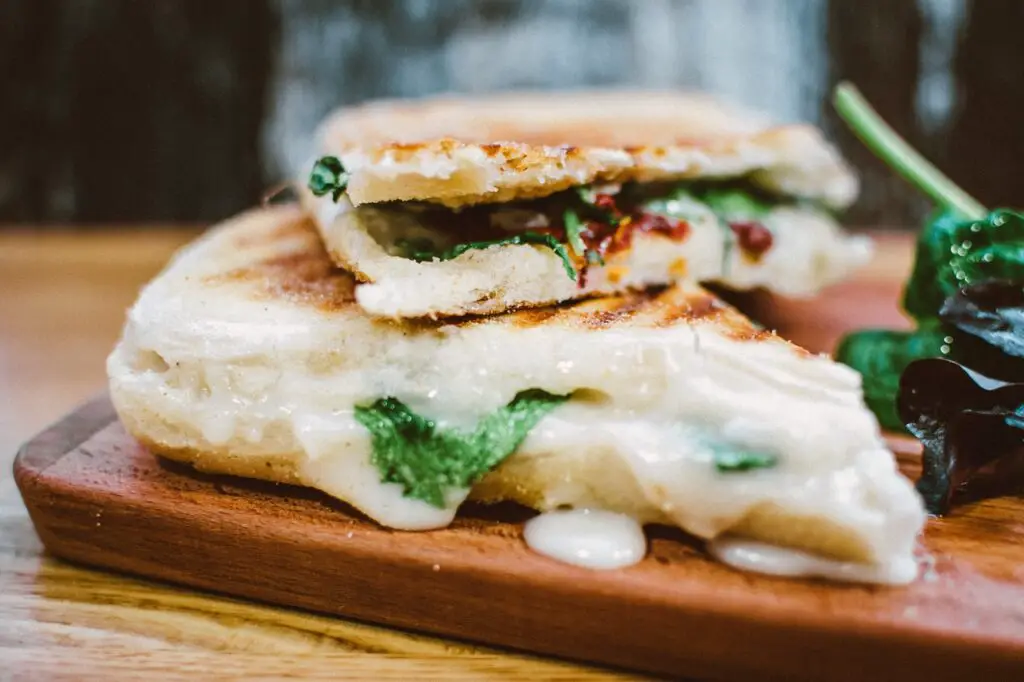
Otherwise known as panino or panino imbottito, the name “panini” means “small bread” or “bread rolls” in Italian. Panino imbottito is translated as “stuffed panino.”
Panini is a sandwich made with toasted or grilled Italian bread like rosetta, michetta, and ciabatta. Panini stuffings range from caprese salad, chicken, turkey, and many more.
14. Tramezzino

Similar to panini is tramezzino, another Italian sandwich which can be square or triangle in shape. Tramezzino consists of two slices of soft white bread with the crusts removed.
The word “tramezzino” is the diminutive of tramezzo which means “in-between.”
Tramezzino is meant as a snack between breakfast and lunch.
15. Bagna càuda

Another traditional Piedmontese food, bagna càuda is a hot dish sometimes served as an appetizer. It is made of garlic and anchovies and typically accompanies vegetables – raw or cooked – that are dipped into it.
The name “bagna càuda” literally means “hot dip,” “hot sauce,” or “hot gravy.” Needless to say, it should be eaten hot.
16. Cacciucco

Cacciucco is a traditional Tuscan fish stew that originated in the port city of Livorno and the town of Viareggio.
Cacciucco is a fisherman’s stew that’s packed with squid, octopus, clams, mussels, langoustines, and fish. It is traditionally served with garlic toast.
17. Ossobuco

Ossobuco or osso buco, also known as ossobuco alla milanese, is a traditional Lombard food made of cross-cut veal shanks braised with vegetables, white wine, and broth. The bone marrow is this delicacy’s defining feature.
Ossobuco is, by standard, garnished with a green sauce made of chopped parsley, lemon zest, and garlic called gremolata. It is also sometimes served with either risotto alla milanese or polenta.
18. Arrosticini (Lamb Skewers)

Arrosticini or lamb skewers are a traditional food from the Abruzzo region in Central Italy. Arrosticini are known locally as arrustelle or rustelle. They are also called spiducci or spiedini.
Arrostini are made from skewered chunks of lamb or castrated sheep meat and cooked on a special barbecue grill called furnacella.
This dish originated from shepherds’ food and other people living in some mountainous villages of Abruzzo.
Arrostini are often served with bread slices soaked in pane ‘onde or extra-virgin olive oil. They also go well with Montepulciano d’Abruzzo wine.
19. Piadina

Piadina, also called piada, is a thin flatbread made with white flour, lard or olive oil, salt, and water. The dough was traditionally baked on a terracotta dish, although electric griddles and flat pans are more popularly used nowadays.
Piadina is among the traditional regional food products of Italy of the region of Emilia-Romagna. It comes with a variety of fillings from cold cuts to cheeses and fruit jams.
20. Parmigiana

Parmigiana, also called parmigiana di melanzane or melanzane alla parmigiana, is an Italian dish made by frying then baking sliced eggplant layered with cheese and tomato sauce.
This dish is said to originate in Southern Italy’s Sicily and Campania regions.
21. Cacciatore

Cacciatore is the Italian for “hunter.” This dish is often made with braised rabbit or chicken and prepared “hunter-style” with onions, herbs, tomatoes, and bell peppers.
Wine is also included in the ingredients sometimes, varying in regions. In the south of Italy, they use red wine for cacciatore. In the north, white wine is preferred.
22. Burrida

A seafood stew or soup originating in northern Italy’s Liguria region, burrida’s main ingredients are fish broth, tomato, onion, garlic, and seafoods like squid, mussels or clams.
This stew is traditionally eaten by soaking round bread buns called gallette del marinaio in it. However, toasted bread is also used nowadays.
Burrida may also be cooked with just dried cod and potato – a simple variation of this Italian dish.
23. Gnocchi

Gnocchi (singular: gnoccho) are often mistaken for a pasta dish. Just like pasta, gnocchi can be consumed with a variety of toppings and sauces – from cheese and tomato sauce to pesto or cream.
However, gnocchi are actually a varied family of Italian dumpling made out of breadcrumbs and potatoes.
Gnocchi is Italian for “lumps.” Gnocchi di pane literally means “bread lumps.” The term gnocchi is believed by some to have been derived from “nocchio,” which meanis “a knot in wood.” Some claim it came from “nocca,” which means “knuckle” – referring to its knuckle-like shape.
Traditional gnocchi are boiled and never fried. These potato dumplings are plain like pasta, that’s why they are served with large amounts of toppings and sauces.
24. Gnudi

These Italian dumplings from Tuscany are made with ricotta cheese, spinach, and semolina, resulting in a lighter and soft, pillow-like dish.
Traditionally, gnudi are eaten with sage sauce and burnt butter, with pecorino Toscano or Parmigiano cheese sprinkles. These are a yummy alternative to pasta or gnocchi.
The word gnudi is Tuscan for “naked,” which is “nudi” in Standard Italian. This name came from the concept of these pillow-like balls being “nude ravioli.”
25. Risotto alla Milanese

The name “risotto” comes from “riso,” the Italian word for “rice.” As the name suggests, risotto is a rice dish.
Risotto is said to have been created in 1574, when a stained-glass colorist was pranked by his assistant. The latter added a pinch of saffron to his maestro’s risotto and – voilà! – risotto alla Milanese was born.
Risotto is cooked with broth from meat, fish, or vegetables broth and stirred to a creamy consistency.
In Italy, this is among the most common ways to cook rice.
Traditional risotto contains saffron for flavor; it also gives this dish its yellow color. Butter, onion, Parmesan cheese, and white wine are also included in the ingredients of various types of risotto.
26. Spezzatino

Spezzatino is akin to the Corsican stufatu and the Hungarian goulash, cooked with veal meat seasoned with peas and potatoes.
Spezzatino is made from veal, beef, lamb or pork and browned with butter, oil, and onions before cooking for a long time. This stew-like dish is served with vegetables, herbs, and sauces.
The dish varies across Italy.
Tuscan spezzatino is made with beef, carrots, onions, and celery. In Friuli-Venezia Giulia, spezzatino is served with dry white wine and aromatic herbs. In Umbria, the traditional spezzatino is made with mutton and roe. In Nuoro, this dish is made with wild boar.
27. Tiramisu
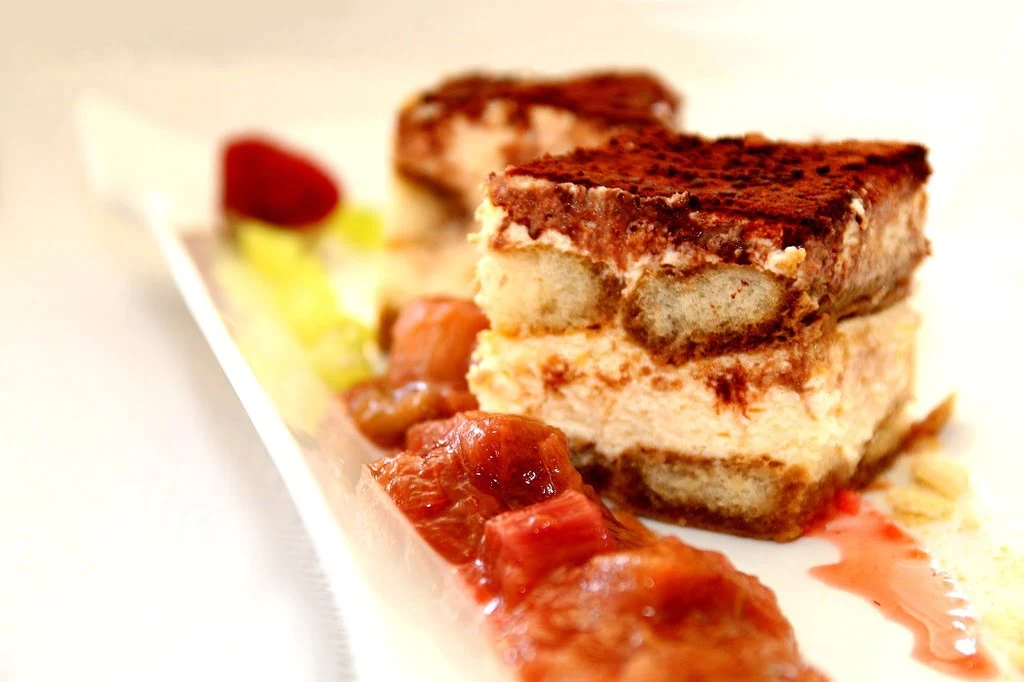
From the Italian phrase “tirami su,” meaning “cheer me up” or “pick me up,” tiramisu is a coffee-flavored dessert which is claimed by both Friuli-Venezia Giulia and Veneto regions of Italy.
Tiramisu has been adapted into varieties of cakes and other desserts. Traditionally, it is made of savoiardi or ladyfingers dipped in coffee and layered with a whipped mixture of eggs, sugar, cocoa, and mascarpone cheese.
28. Crostini

Literally translated as “little crusts” in Italian, crostini are an appetizer made of little slices of bread and brushed with olive oil, then grilled or toasted until crisp and golden.
They are then topped with vegetables, condiments, meats, and varieties of cheeses. These crusty bread may also be served with herbs or sauces.
Crostini are believed to have been created during the Middle Ages. Back then, Italian peasants ate their food off of stale bread instead of plates. Hard stale bread was soaked in wine or brushed with olive oil to make it edible.
29. Coda alla vaccinara

Coda alla vaccinara is a Roman stew cooked with an oxtail, aromatic herbs, and various vegetables like carrot and celery. Tomatoes and red wine are also included, as well as garlic, onions, prosciutto, and other ingredients. Raisins – and sometimes chocolates – are added for a sweet-and-sour taste.
Coda alla vaccinara was originally the specialty of the vaccinari or butchers in Rome.
30. Purgatorio
A traditional Calabrian vegetable dish, purgatorio or purgatorio alla Calabrese is sometimes considered by some as a sandwich, calling it “purgatory sandwich.” This is due to the hollowed-out loaf of bread it is commonly served in.
Purgatorio is prepared with eggplants, plum tomatoes, young potatoes, basil, peppers, and olive oil. These ingredients are cooked in a sauce, which is then spread in a loaf of bread. The bread is closed and sliced before serving.
This dish should be consumed while the sauce inside is still hot.
Purgatorio’s intriguing name is not explained, but I must say maybe because it’s close to heaven!