

What do you know about Italian people? Do they have a distinct personality, a uniquely Italian trait, or anything that makes them stand out in a crowd of other Europeans?
Among non-travelers and those interested in learning more about this country, what are Italians known for? Most of the time, we can’t answer without first thinking about food or high fashion, which are entirely different entities.
In this guide, we’ll get to know more about the Italian people — a few clarifications about certain stereotypes, and some common traits. And of course, more about that one thing they are most known for: devotion to la Famiglia.
The Italian People

What/Who Are Italian People?
The citizens and nationals of Italy are the Italians, or Italiani in their language, regardless of ancestry or nation of residence. However, they may be distinguished from people of Italian descent without Italian citizenship and ethnic Italians from territories adjacent to the Italian peninsula sans Italian citizenship.
Since many various ethnic groups have dominated the Italian peninsula throughout the centuries, it is impossible to describe Italians based on a standard set of physical features.
North and South
As a result of the invasions and colonization that followed the fall of the Roman Empire, the ethnic makeup of Italy changed forever.
Germanic tribes crossed the Alps while Mediterranean peoples arrived by water in the south.
Five centuries after the Lombards (a Germanic tribe) took control of Benevento and other sections of the mainland, the Byzantines dominated the south.
The numerous invasions and occupations were the reason why the appearance of Italians in the north and south of the country differed dramatically.
Sicily, however, is an exception.
The Blond Sicilians

The Saracens conquered Sicily in the 9th century and stayed until the early 11th century when the Normans arrived and took over.
In 1282, the Aragonese took over from the Normans, then Sicily was annexed by the Austrians in 1720.
All of these resulted in Sicilians with blond hair and light skin and eyes in a region where people usually have darker skin and eyes.
What Are Italians Known For?

Common Stereotypes About the Italian People
The Mario Brothers aren’t representative of all Italians, and they aren’t all related to the Corleones either.
Some common Italian stereotypes will be examined to see if they are, in fact, accurate.
1. Italians can’t live without pasta.

This is a widespread Italian stereotype that’s true.
Italians eat an average of 60 pounds of pasta each year and these include male, female, and child consumers.
Italians also make their pasta from scratch, compared to the rest of the world who buy the manufactured ones from supermarkets.
Along with the fact that Italians have a huge variety of pasta dishes, it is not a surprise that Italy is the pasta capital of the world.
ALSO READ:
• 12 Most Popular Types of Pasta in Italy
• 13 Famous Pasta Brands in Italy
2. Italians talk with their hands.

Nonverbal communication is an important part of the Italian way of doing business.
In Italy, there’s a popular myth that you can pick up on a discussion that’s taking place in a language you can’t hear merely by observing someone’s hand movements. Because of this lovable habit, Italians are some of the world’s most emotive and impassioned speakers.
3. Italians are passionate about football.

Football is a huge part of Italian culture since it provides a means for the country’s citizens to get together and show their support for their local team.
You’ll hear a lot of talk about Juventus, Milan, and Inter when Italians are talking about football. When there’s a soccer match on, the entire country turns their focus to it.
ALSO READ:
• 5 Best Italian Soccer Players of This Generation
• 10 Most Popular Italian Athletes
4. Italians are big on public display of affection.
Italian culture supports the display of emotions, whether it’s sobbing, yelling, or expressing love. Showing affection is not an issue for Italians. It’s not uncommon to see couples cuddling up and kissing in the open.
Furthermore, don’t be surprised if you see two male pals walking close together, perhaps with one arm crossed over the other’s back for a few moments as they converse and stroll.
Italians also greet each other with a cheek kiss as a way to show their affection.
Traits of the Italian People

Is there such a thing as Italian temper?
Is it true that Italian guys are Casanovas?
What are Italians known for, besides their delicious food and rich culture?
We have made a list of some of the most common characteristics that you’ll notice in Italians. Please note, however, that the following are generalizations and not every Italian individual is as described below. Capisce? Now let’s dive in.
1. Late to the Party
When it comes to being on time, Italian people are fairly laid back. Don’t expect Italians to be on time when you meet them. For Italians, 10 or 15 minutes late is regarded as both acceptable and elegant.
2. Hospitality
The Italian people are kind and friendly. They are friendly and eager to assist you with your inquiries. It doesn’t matter if you don’t know much about their language; they are grateful that you are attempting to communicate with them in their native tongue.
3. Advocates of Physical Activity
Italian people, despite their love of good food and their tendency to overindulge, make sure to keep active to counteract this. Cycling, running, or any other form of exercise is commonplace in parks across Italy.
4. Emotional
Italians have a strong sense of self-expression. If someone does not agree with them, they are ready to vent their frustrations at any time. There are moments when the conversation gets heated rapidly, but as they say: “Friends, as usual.”
5. Love for Food

Food is a topic that comes up frequently in casual talks among Italian people. They love talking about the food they cook or eat. Food is a central part in Italian celebrations, that it’s safe to say great food is the Italian people’s love language.
6. Traditionalism and Cultural Sensitivity
Their history and customs hold a special place in Italian hearts. The fact that they are the creation of so many people may be the reason for their uniqueness. Italians are generally proud of their nation and enjoy telling people about it.
7. Fashion and the Italian People
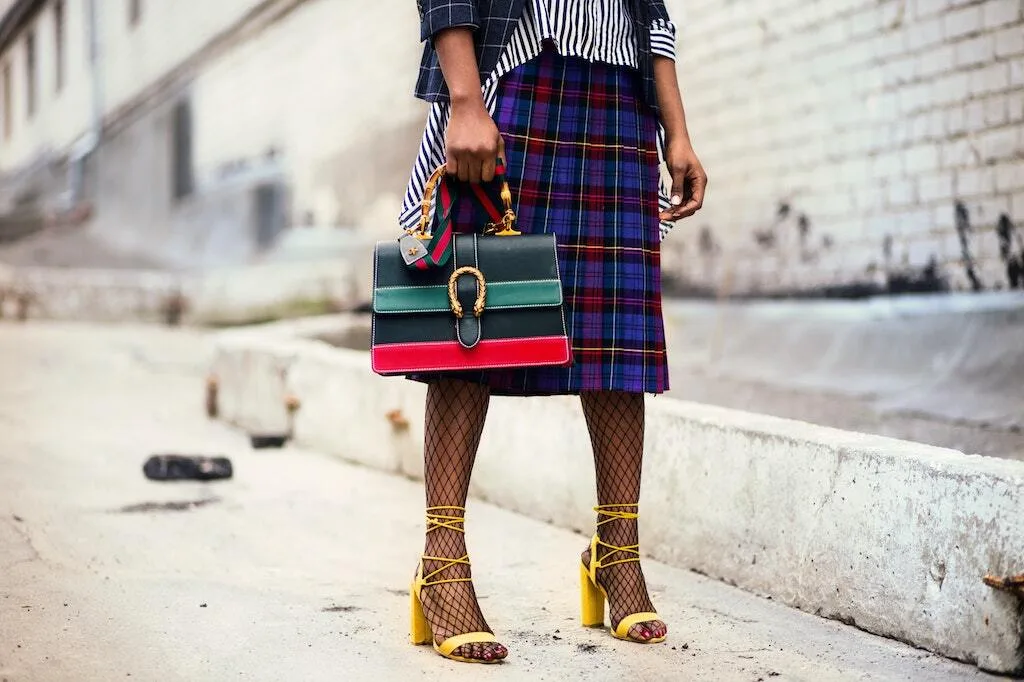
Taking good care of one’s appearance is something that both men and women do in Italy.
A woman’s natural beauty is lauded, but so are the small touches of her clothing.
The style in the South is bolder and more vibrant, whilst the style in the North is more laid-back and refined.
8. Communication via Hand Gestures

Gestures and facial expressions play an important role in Italian communication. There’s even a running joke that you can easily “eavesdrop” on the life story of a stranger at the other table, simply by watching them talk with their hands.
9. The Significance of a Strong Family Unit
Italian culture has been heavily affected by its long history of Catholicism and Christianity.
In Italy, the importance of families cannot be overstated. Italians are accustomed to having a strong network of family and friends to lean on in times of need.
10. Just one area of concern, as observed by tourists —
People on vacation in Italy are often surprised to discover how inconsiderate many Italians are toward others they don’t know personally. There are many everyday examples of this, such as not cleaning up after their dogs, pushing in front of others when queuing, and talking over the top of people without allowing them to finish their thoughts.
Public transportation is also a place where many young individuals refuse to get up and give seats to the elderly, pregnant women, and moms with young children.
Family in Italy

People in Italy are more loyal to their families than to their country. Despite an increase in migration and some families being physically separated, the family remains at the center of society, providing stability and cohesion.
In the South, extended families are more likely to live together, but in the North, nuclear families are more common. Grandparents play an important role in child care, especially if both parents are working.
Italian Children
Children are taught to be obedient and devoted to their parents through diligent observation and training.
Children in Italy are pampered when they are small, but as they become older, they are expected to help out around the house.
In rural areas, children are expected to help out with household chores and run errands.
Children are also taught to show consideration for the elderly. As an example, when visiting with senior family members, youngsters are expected to give up their chairs so that adults can enter first.
Family Dynamics
More and more Italians are choosing to have fewer children to save money and space. Non-traditional family values are becoming more popular, but the function of the family is still crucial in providing social cohesion and a sense of belonging.
Rural Italians tend to be more family-oriented than their city-dwelling counterparts. Many families live near each other and are active in each other’s lives on a day-to-day basis. There may be a high emphasis on keeping family reputations in some small villages and towns where families have lived next to each other for centuries.
Social Life
It’s common for Italian families to gather for meals and celebrations as a way to spend time together. It’s common for them to eat together at home or in bars and restaurants. This passion for cuisine is in keeping with the Italian family’s long-held ideals.
The piazzas in Italy’s towns and cities encourage families to spend time outdoors in the spring and summer. It is customary in rural areas for families to gather in the village square.
In the evening, city dwellers go out as well. Shopping, eating, and drinking is common pastimes for Italians in major cities like Rome.
Italian families have many opportunities to gather together because of the frequent celebrations that take place in their culture.
Ninety percent of the Italian population adheres to the Catholic faith, thus, there are numerous saints to honor every day. Family church attendance has declined, but busy families still gather on Sundays for Sunday lunch, and Catholicism continues to provide a moral framework.
Gender Roles

Women in Italy are taught from an early age to be confident and self-aware. They are known for their self-assurance. This, however, may differ from person to person. Despite this, there are still certain sexist undertones in Italian culture.
Catcalling and wolf-whistling are frequent in Italy, where women are often stereotyped as being beautiful but lacking in intelligence.
Although social attitudes are changing, women’s advancement in the workplace may still be hindered by the fact that they may not be regarded seriously. The fact that women in the workforce confront additional obstacles, such as lower earnings and a preference for hiring men, is just one of the difficulties they encounter.
Italian society remains overwhelmingly male-dominated, even if women have equal rights in the law.
In most families, the man is the head of the household and the principal breadwinner. Matrimony and parenthood were traditionally regarded as the responsibilities of women. These days, however, most Italian women have a college degree and work to help support the family financially.
The majority of the domestic responsibilities are still expected to be handled by women, though. In rural and urban settings, as well as between different socioeconomic strata, gender roles might differ. The urban or upper-class population, for example, is more prone to share responsibility.
For the past few decades, fertility rates have been steadily declining, and this trend is expected to continue for the foreseeable future.
ALSO READ:
• How To Date an Italian Man
• How To Date an Italian Woman
Frequently Asked Questions About the Italian People

1. Who settled first in Italy?
The very first settlers in what we know now as Italy were the Neanderthals. They inhabited the land some 500,000 years ago. The next to settle there were our modern human ancestors.
2. Who were the natives of Italy?
The ancient peoples of Italy were the Etruscans and Greek tribes called the Sicels, the Sicani, and the Elymians. They inhabited the southern Italian peninsula between the years 800 and 200 BC along with various Italian tribes such as the Sabines, the Latins, the Samnites, the Ligurians, and the Campanians.
3. What is the race of the Italian people?
Italians belong to the Caucausian (or white) race.
4. Are Italians and Romans the same?
Modern Italians are not Romans. They are descended from the ancient inhabitants of Italy.
In their day, Romans were Italians as they came from the Italian peninsula. However, most Italians were not Romans. They only became Romans when granted Roman citizenship, so basically “Roman” is a status and never an ethnicity. It can refer to a person who lived in the Roman Empire.
ALSO READ:
• 13 Most Famous Italian Artists of All Time
• 11 Famous Italian Actors in Italy
• 12 Most Famous Italian Actresses in Hollywood
• 10 Most Famous Italian Singers of All Time
• 14 Most Famous Italian Fashion Designers
• 15 Most Famous Italian Poets
• 11 Most Famous Italian Writers of All Time
• 8 Most Famous Italian Philosophers You Should Know
• 10 Famous Italian Scientists Who Changed the World
• 10 Most Famous Italian Saints You Should Know
• 18 Most Famous Italian Chefs You Should Know